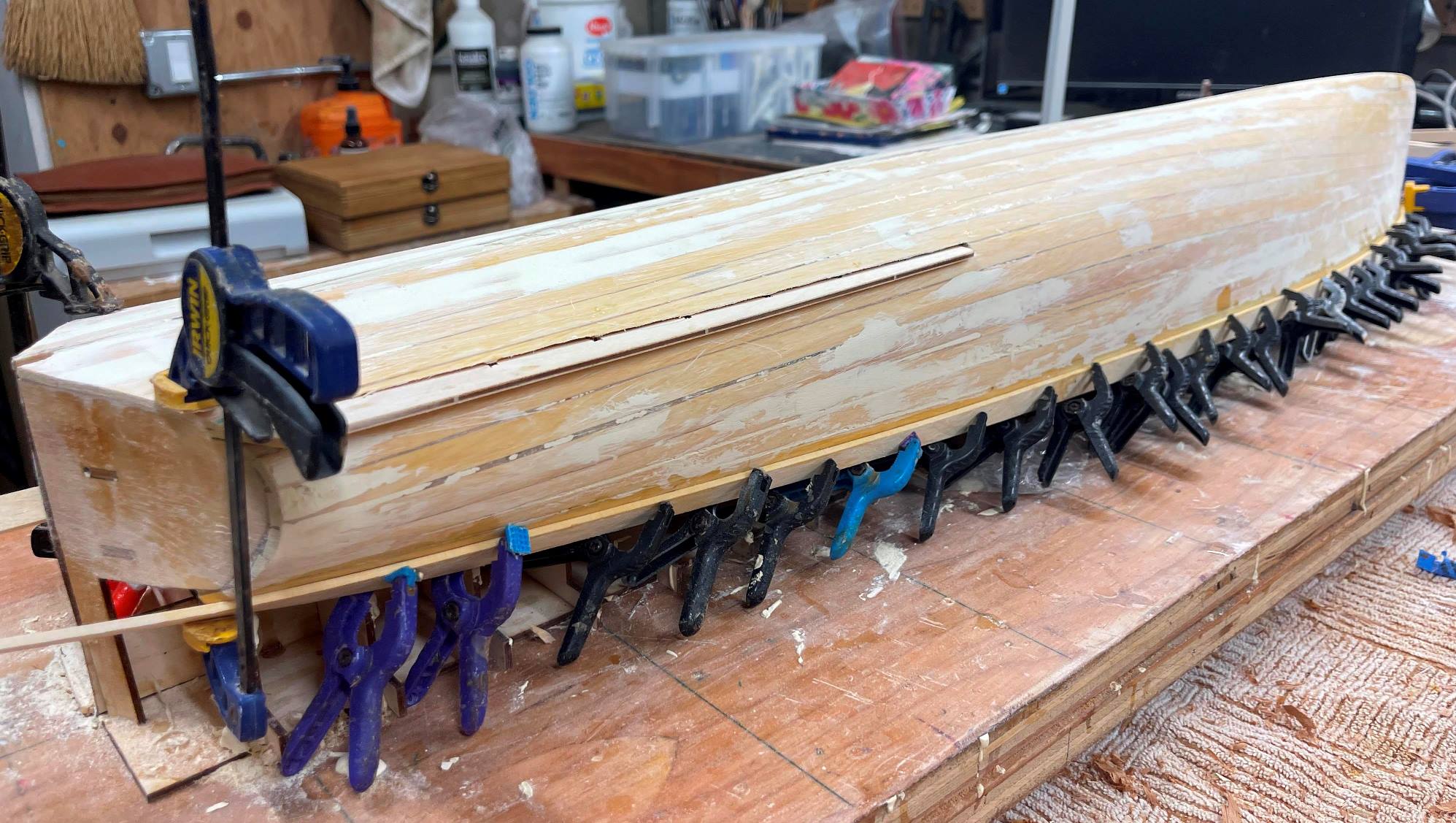
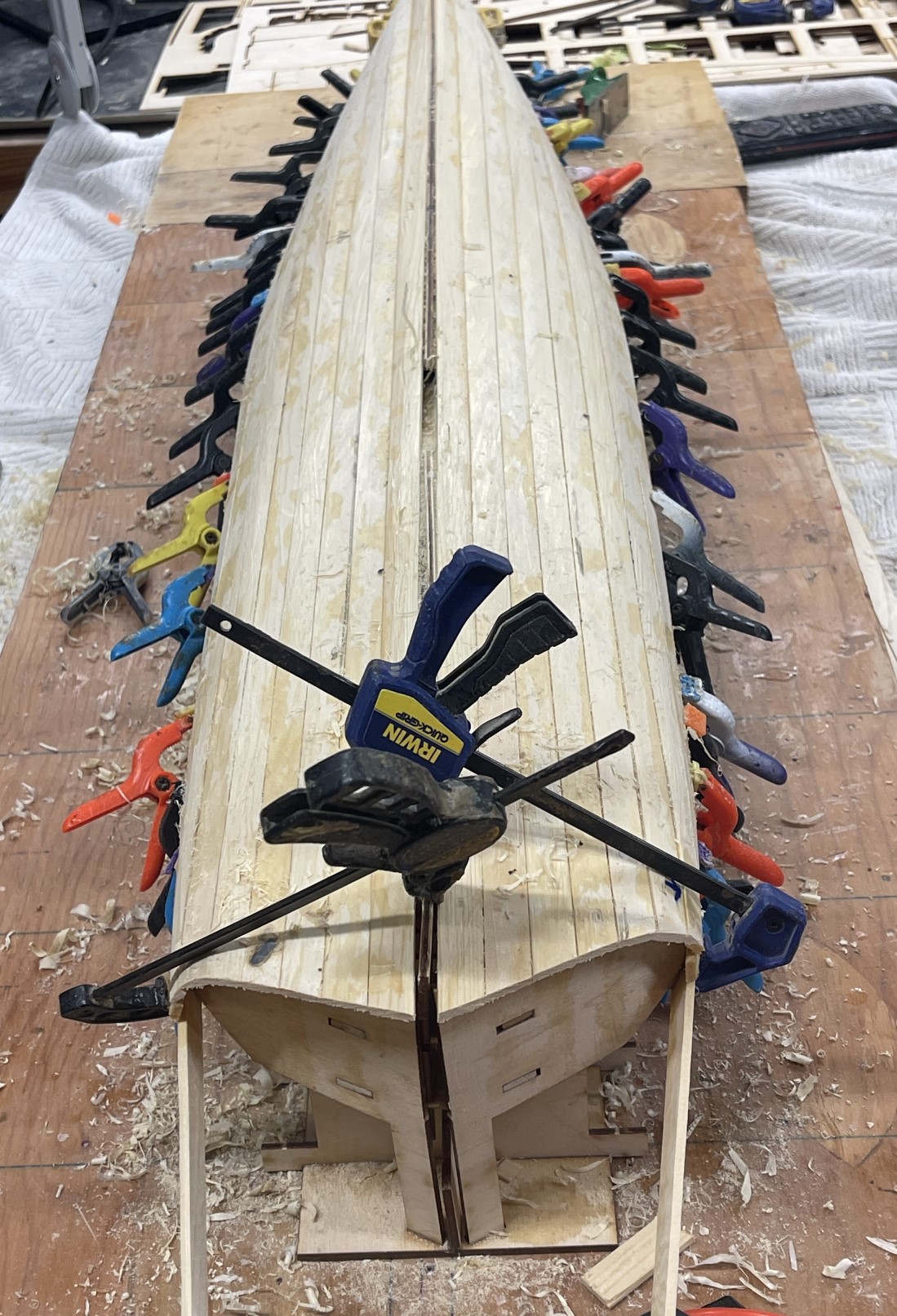
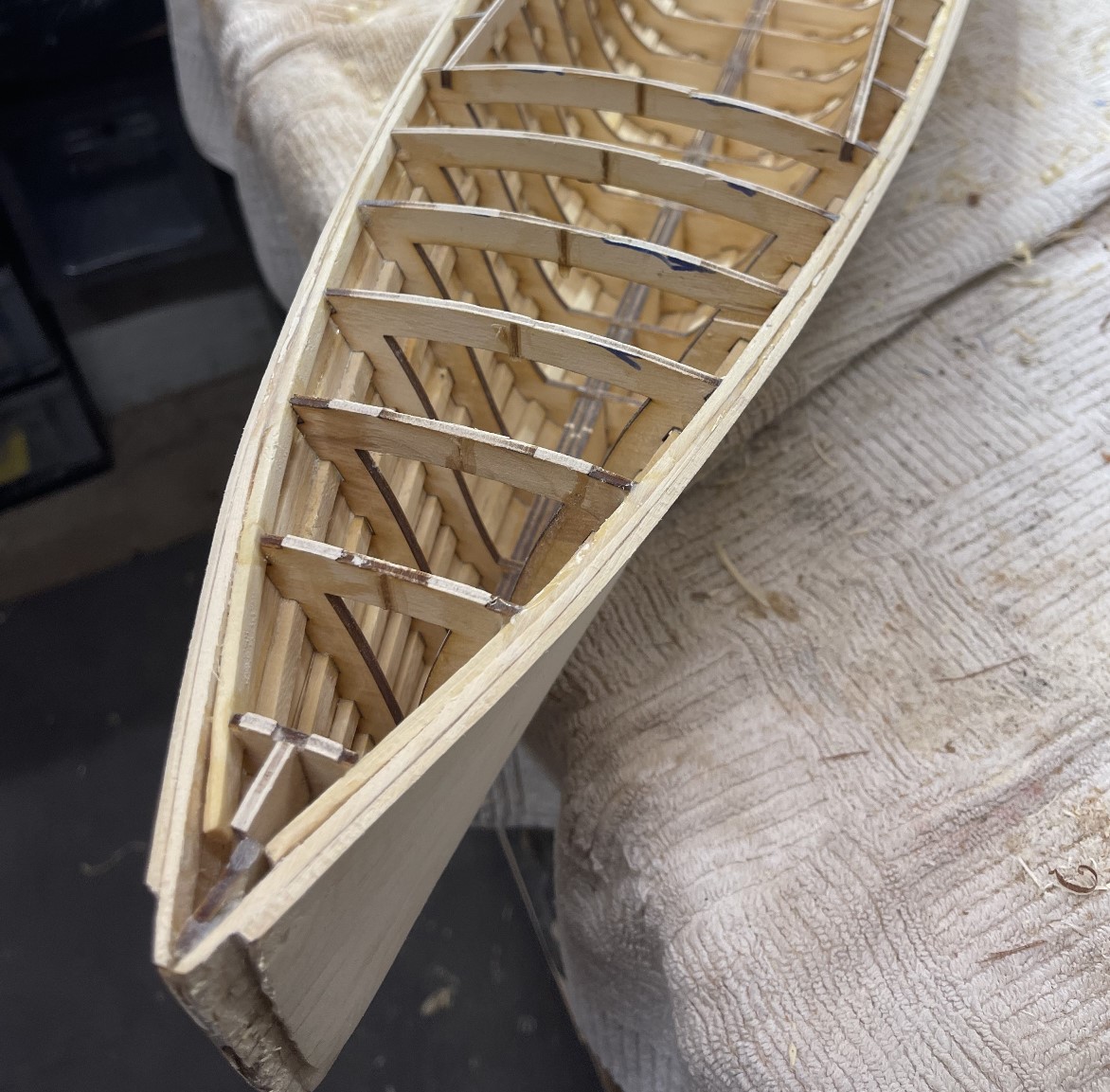
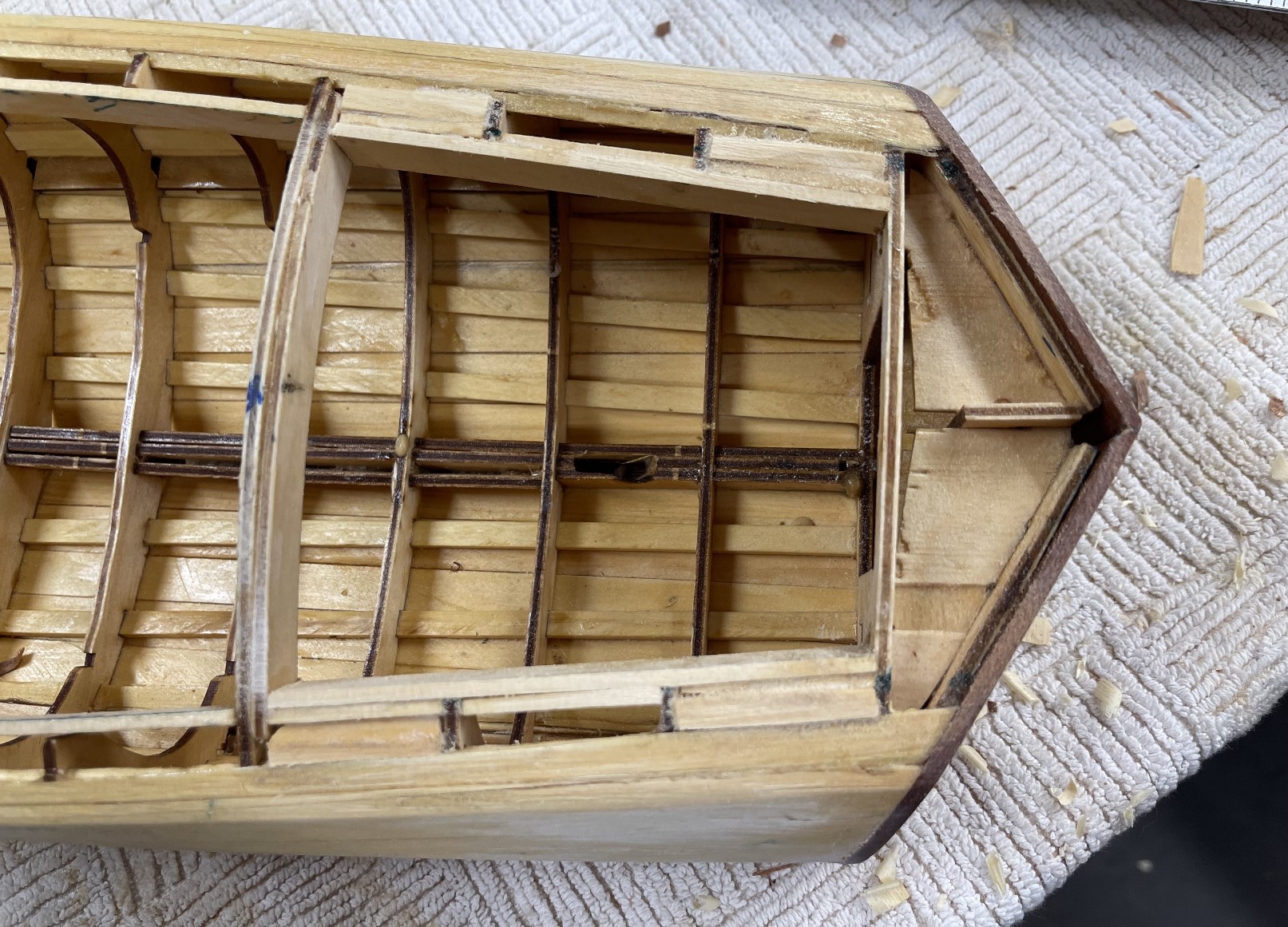
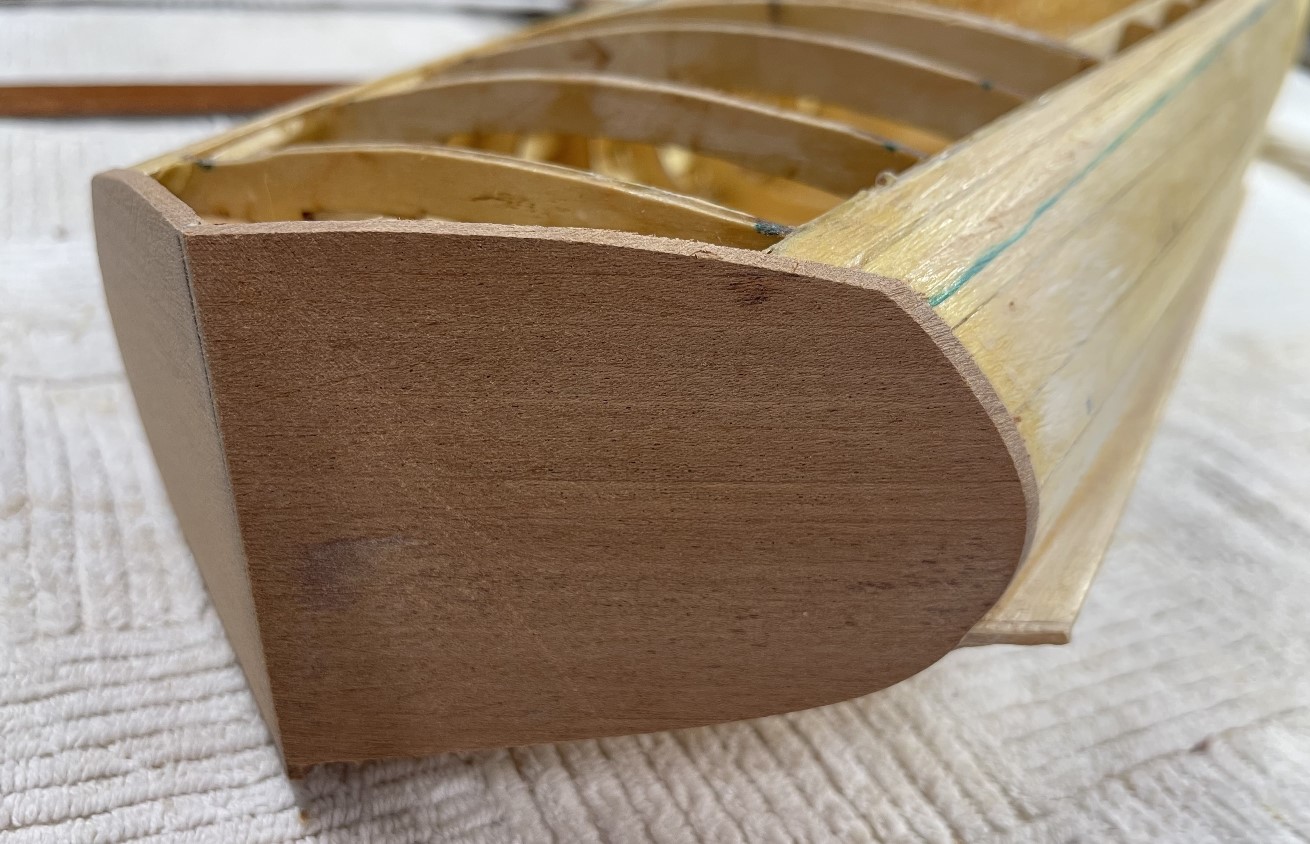
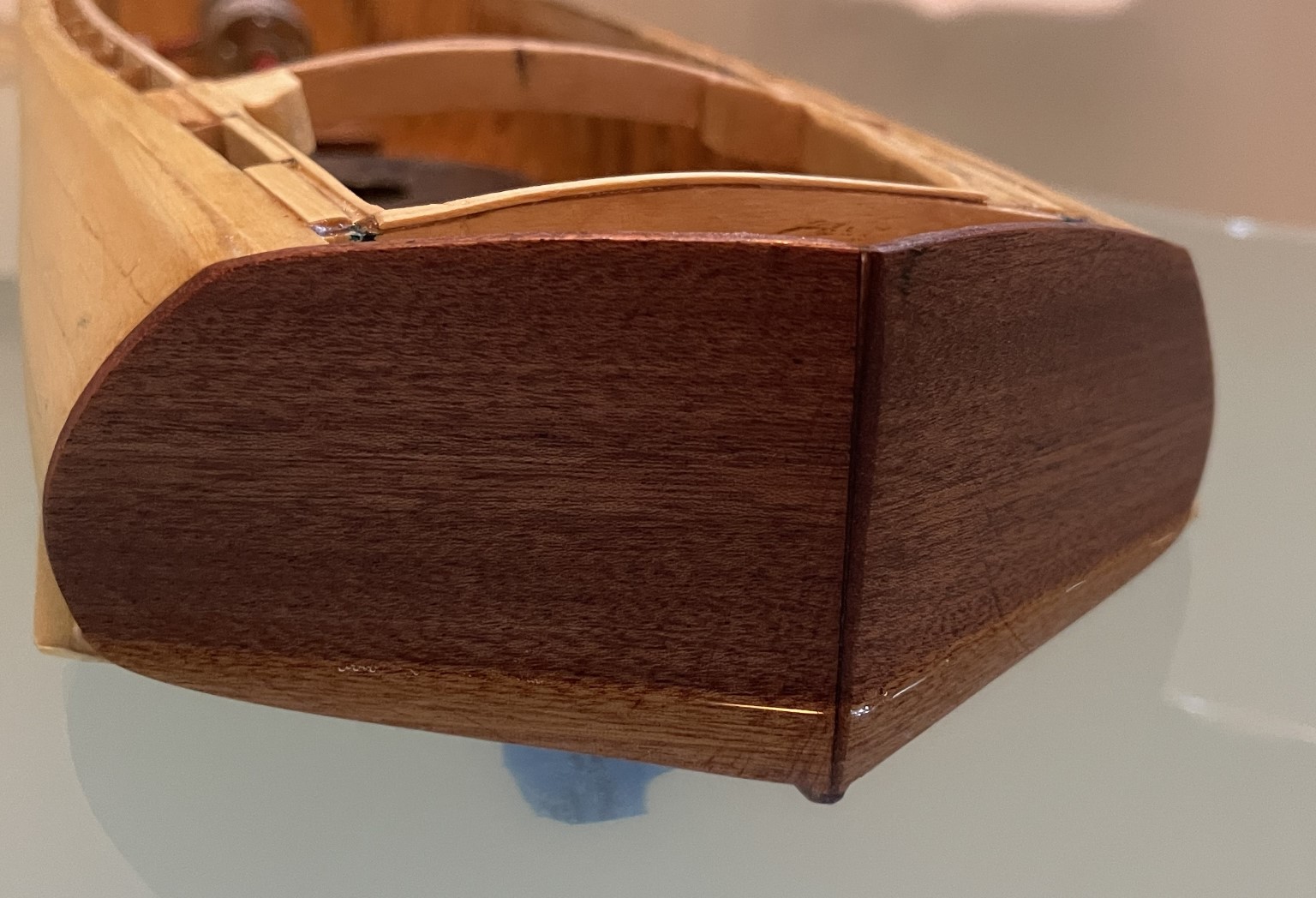
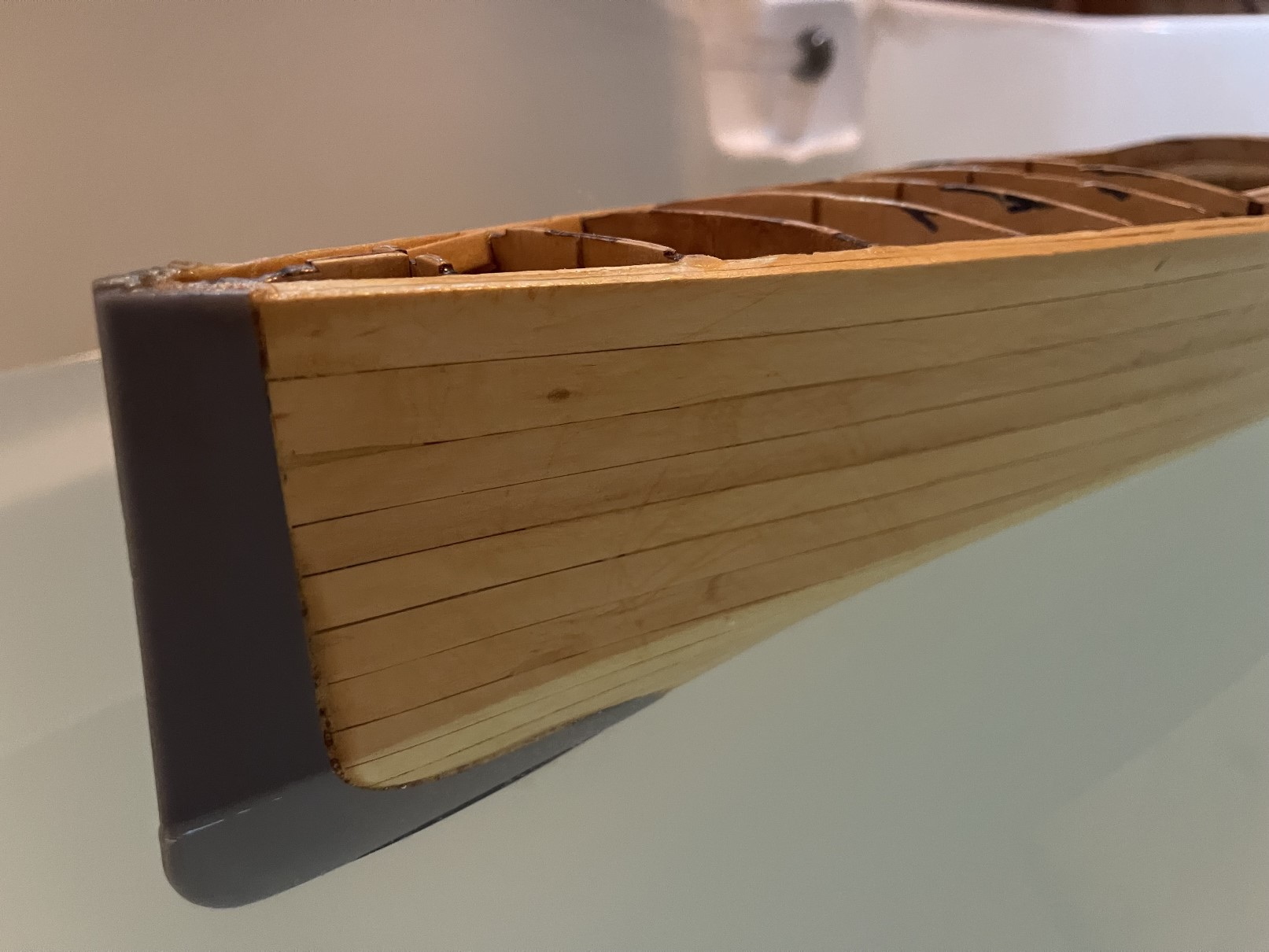
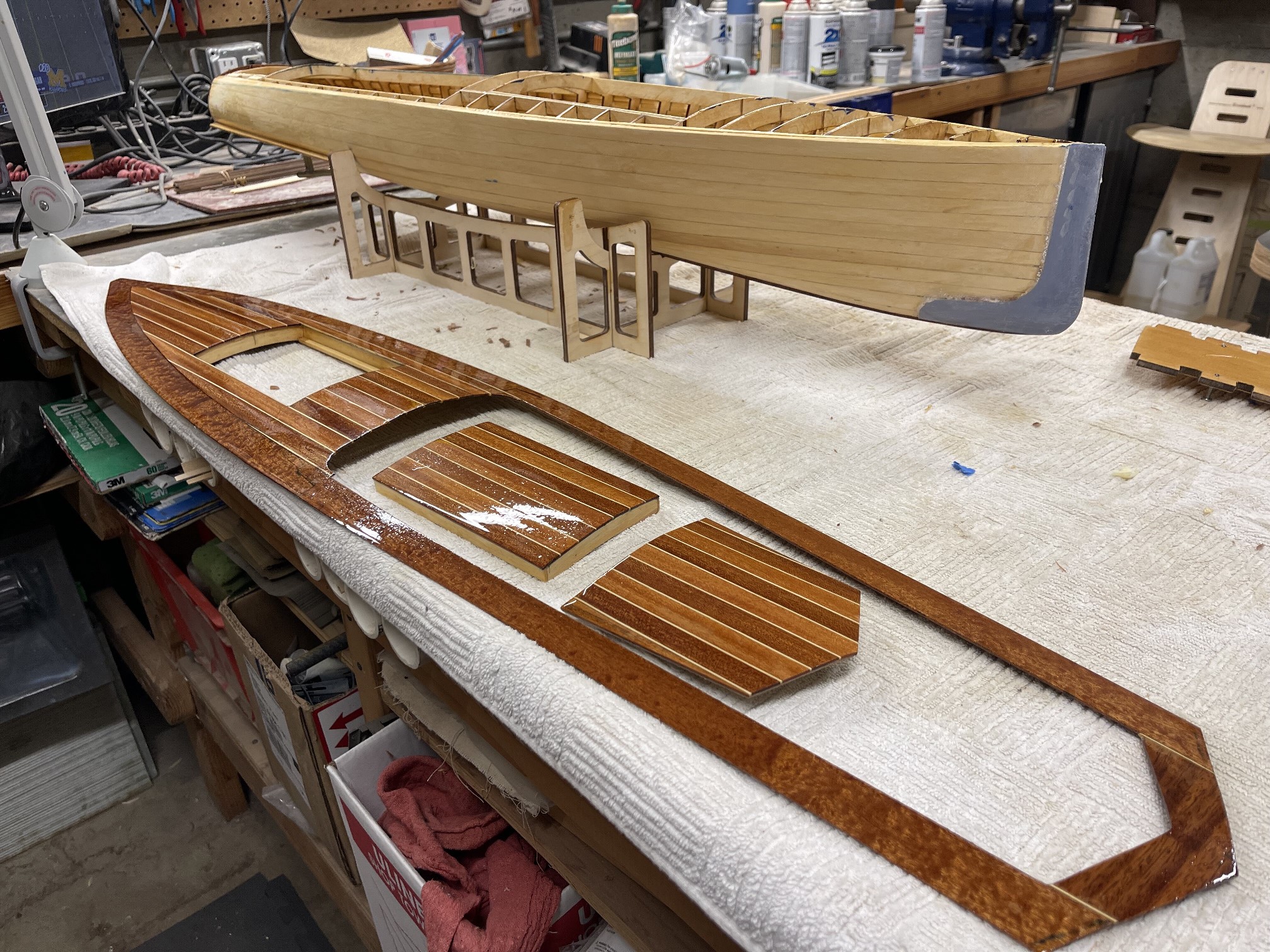
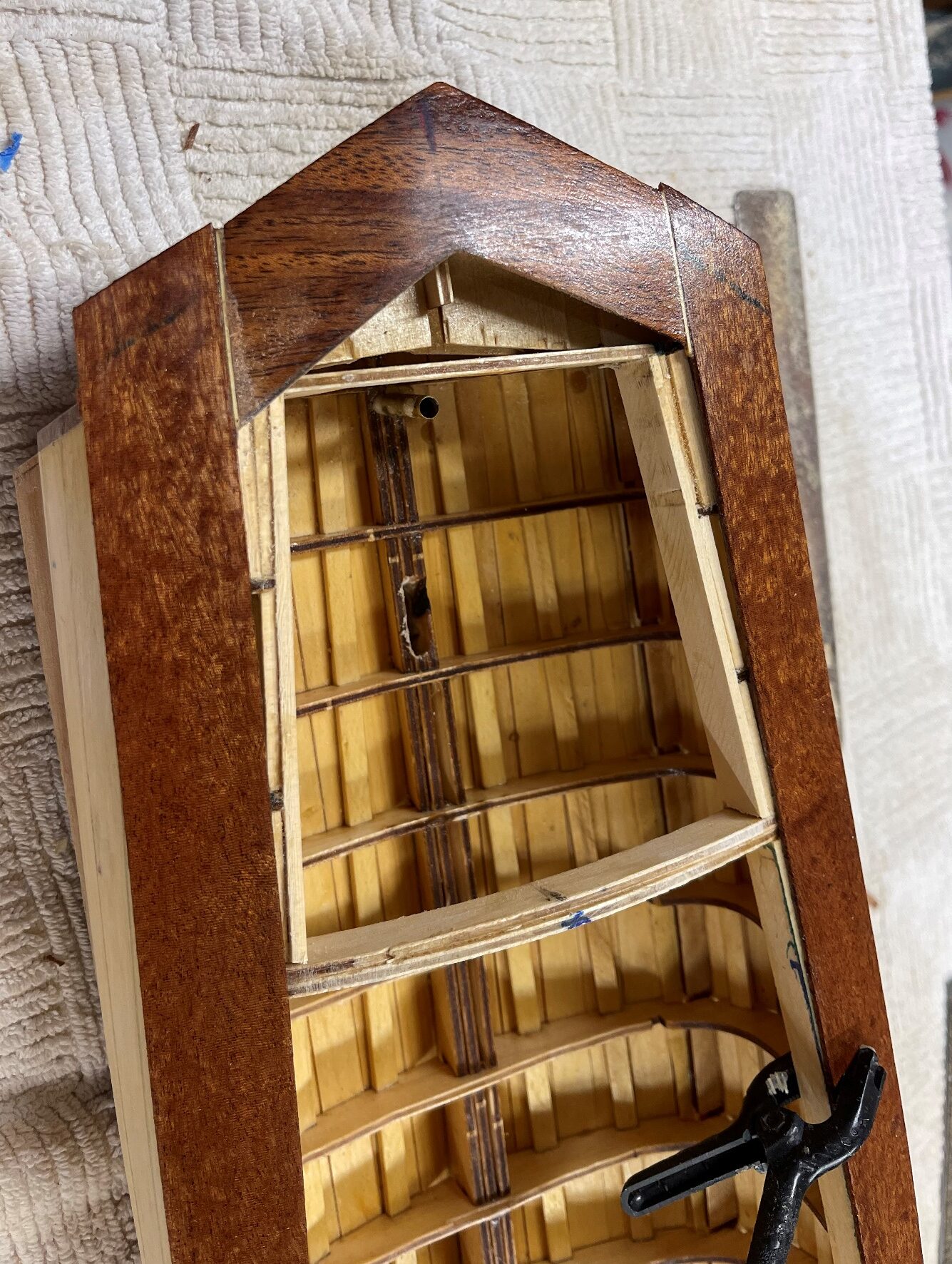
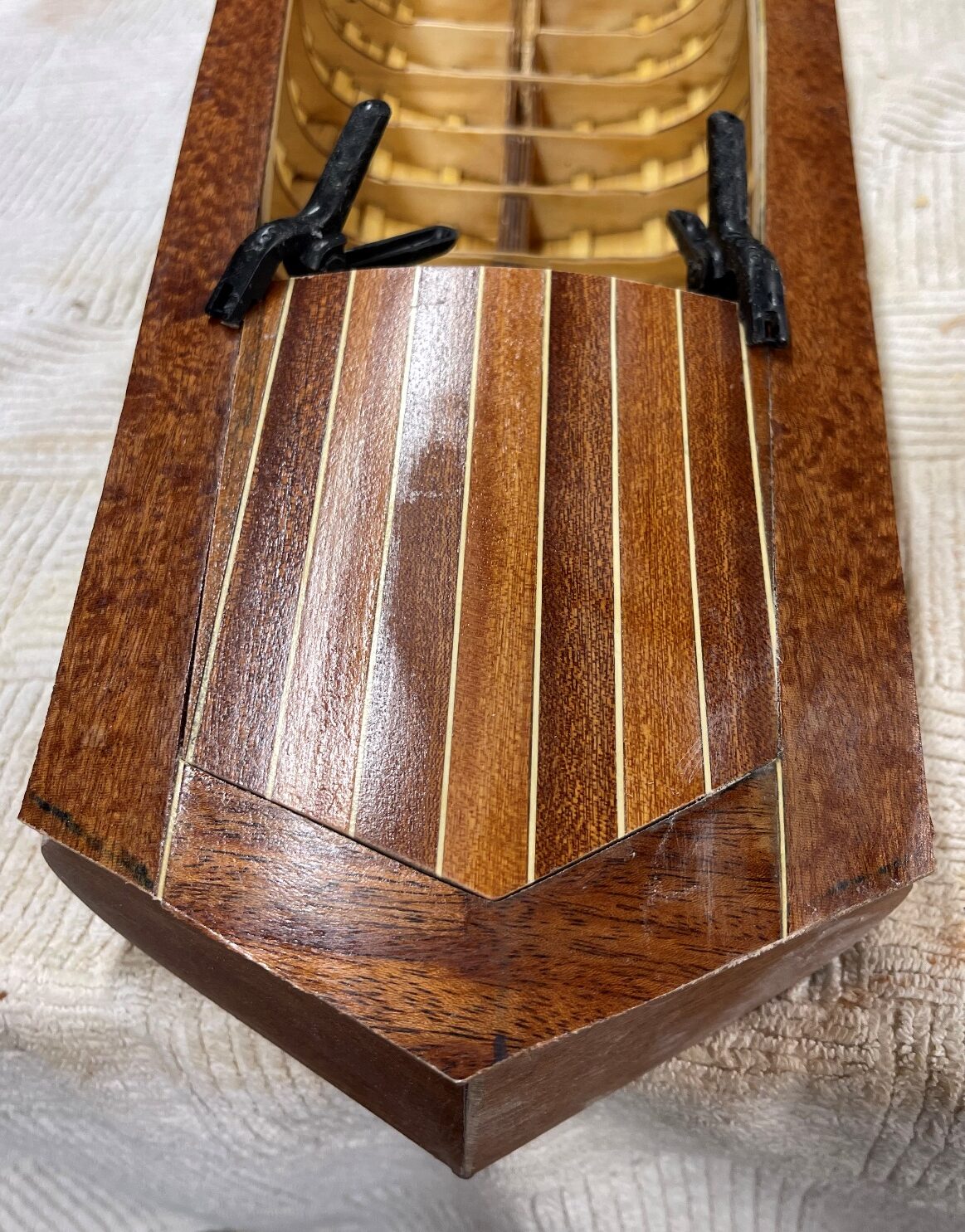
I use two layers of 3/32” x ½” yellow cedar for my boats.
The frame dimensions have taken the thickness of the planking into account.
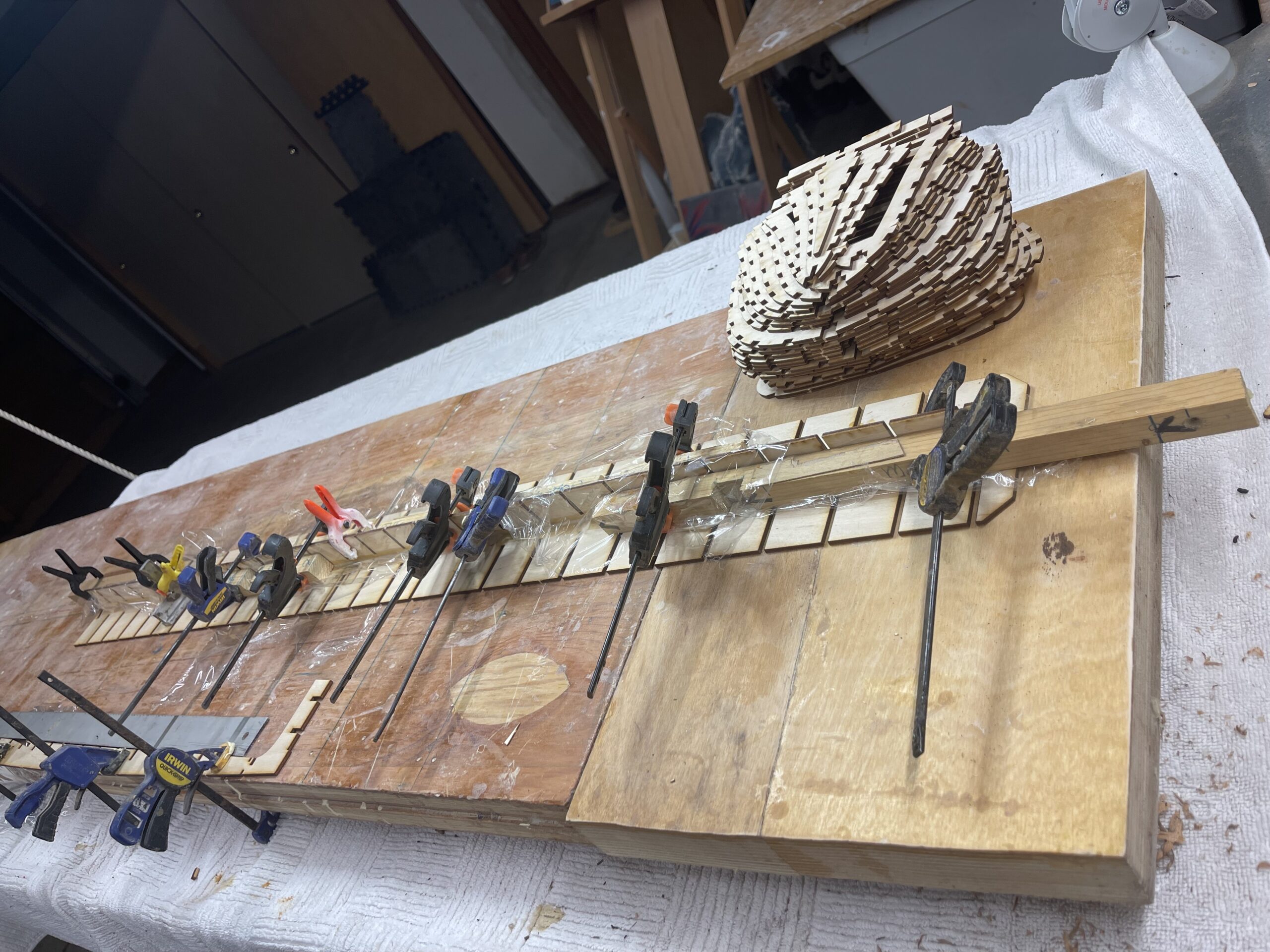
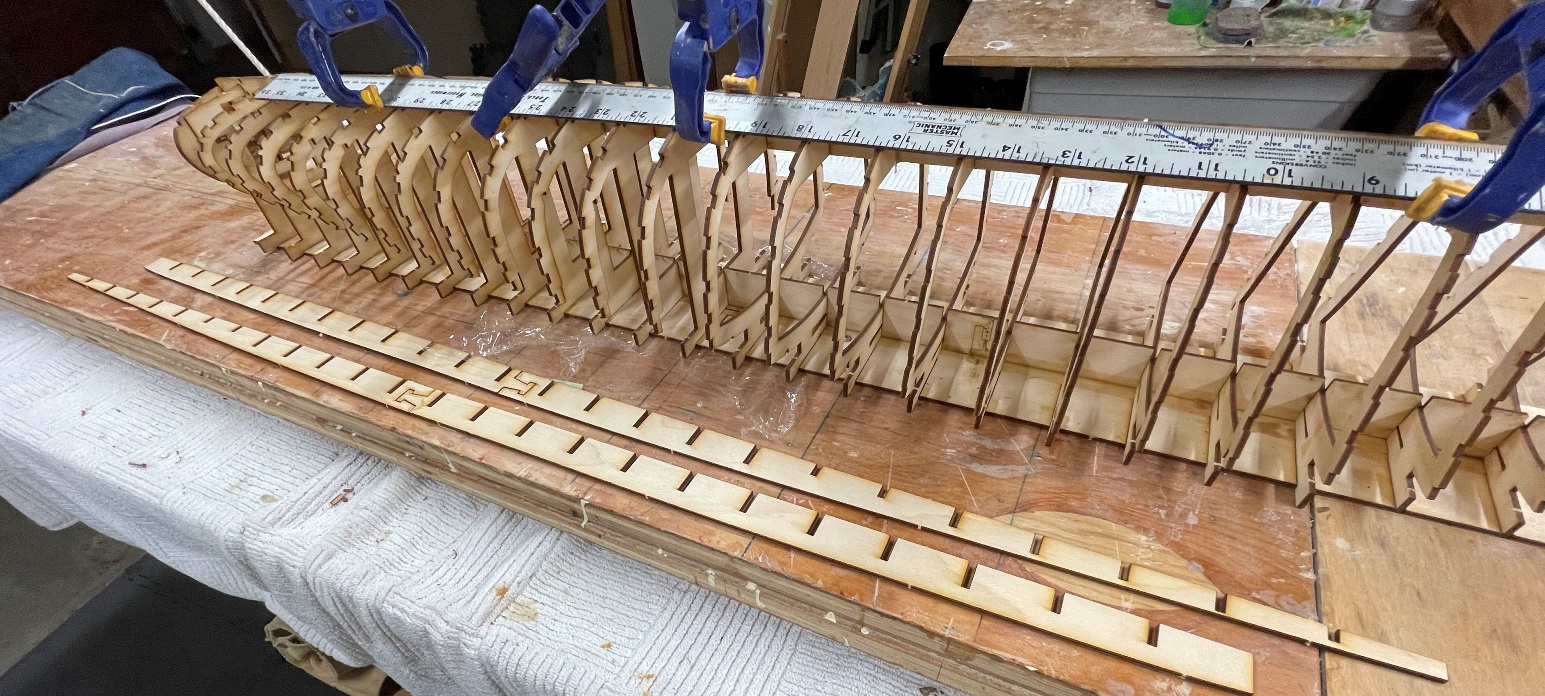
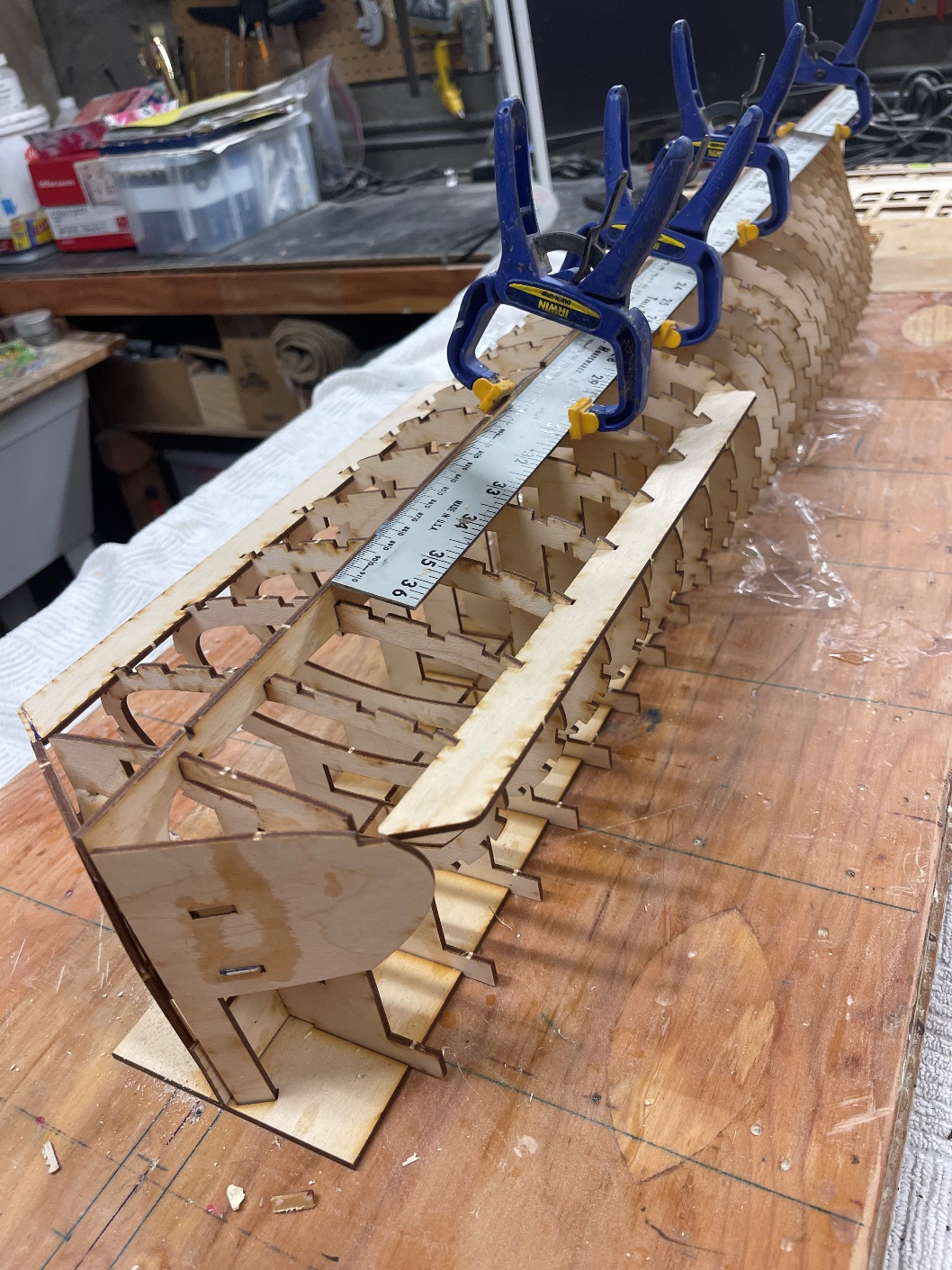
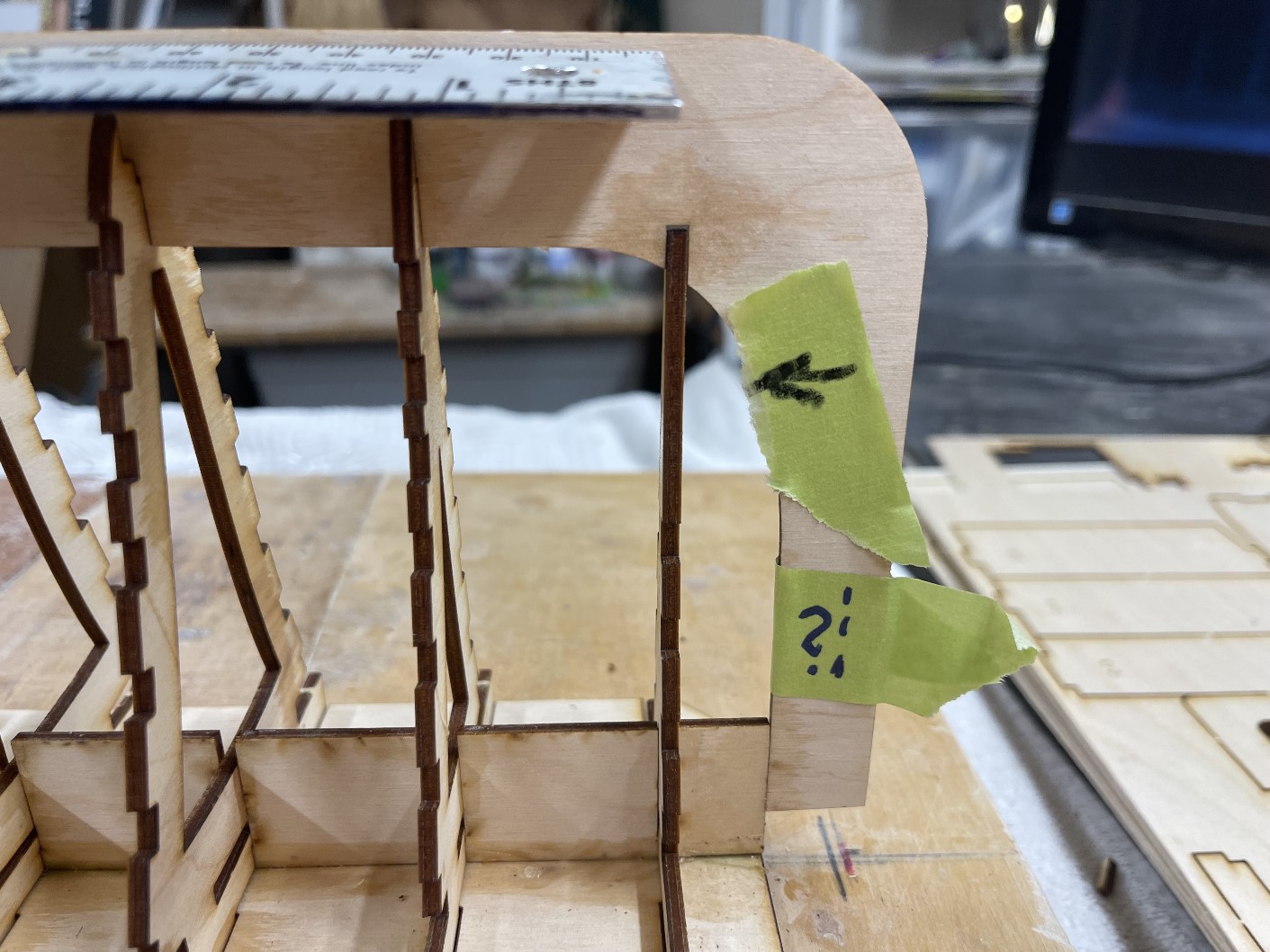
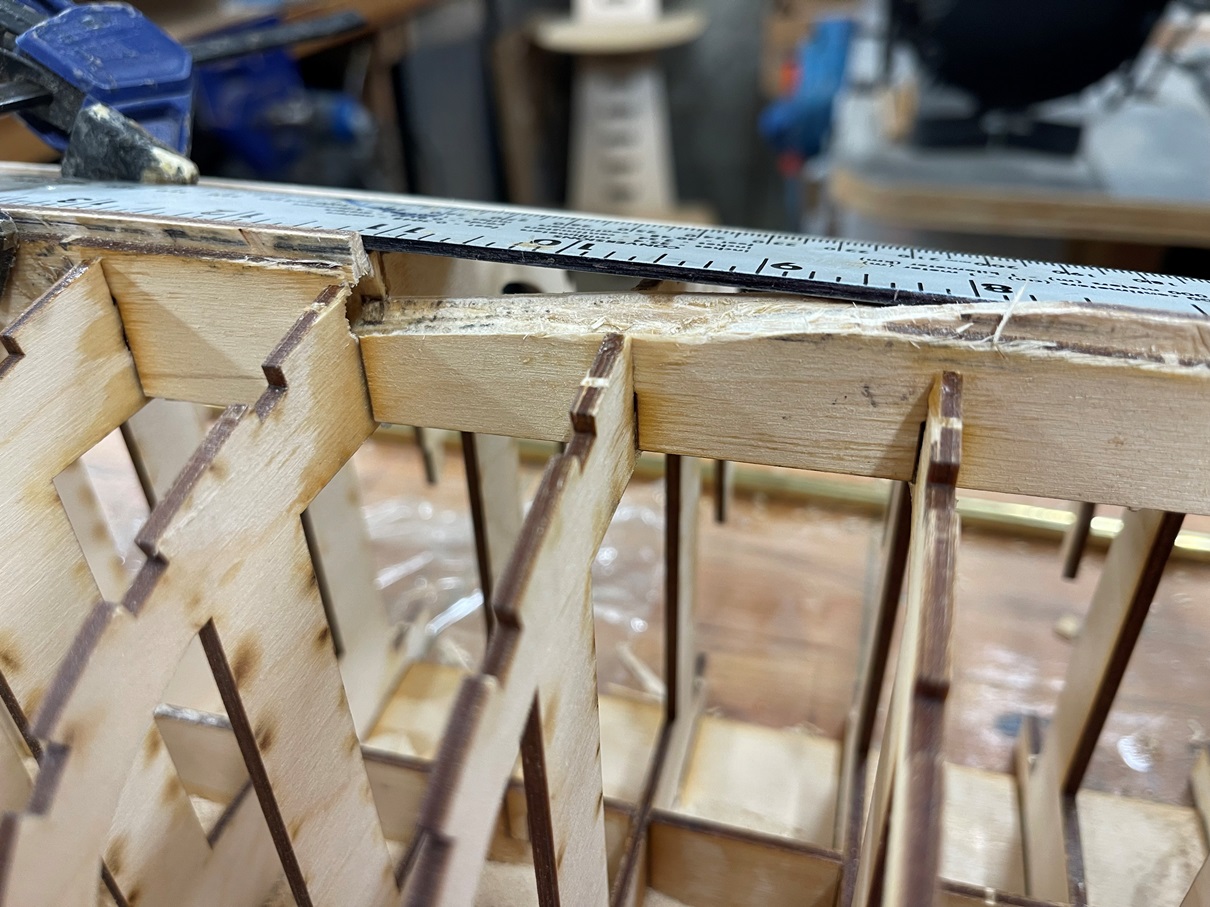
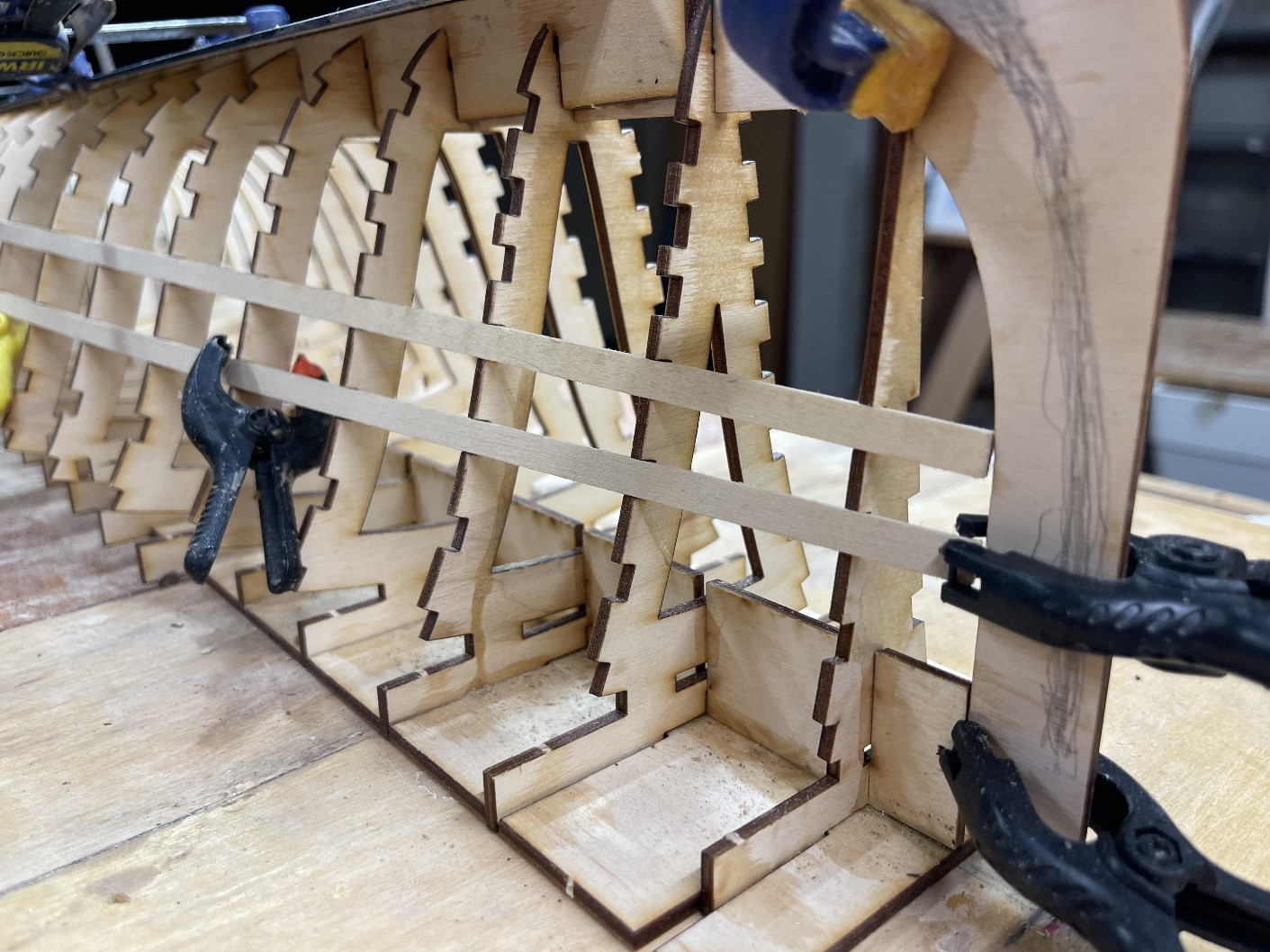
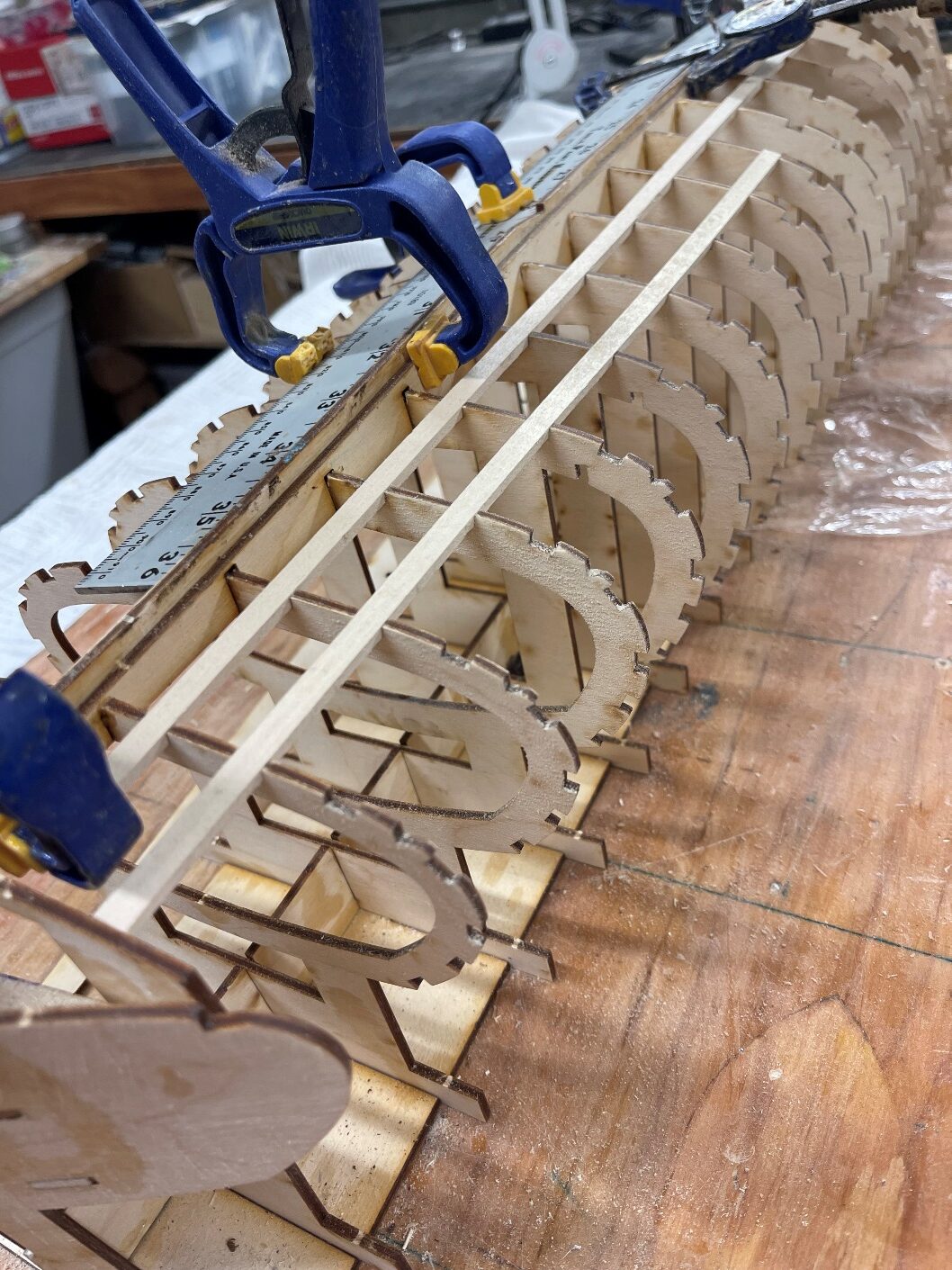
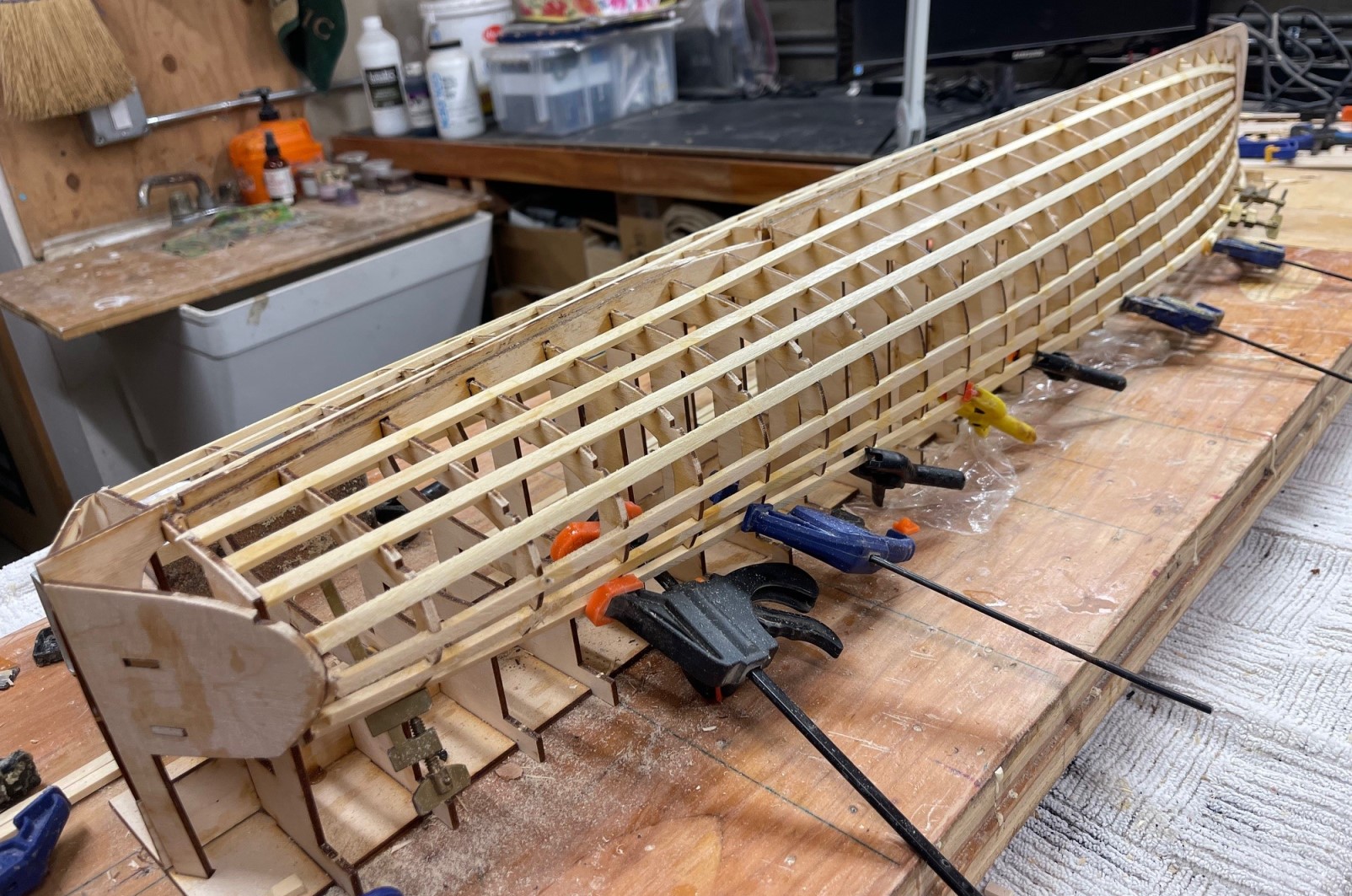
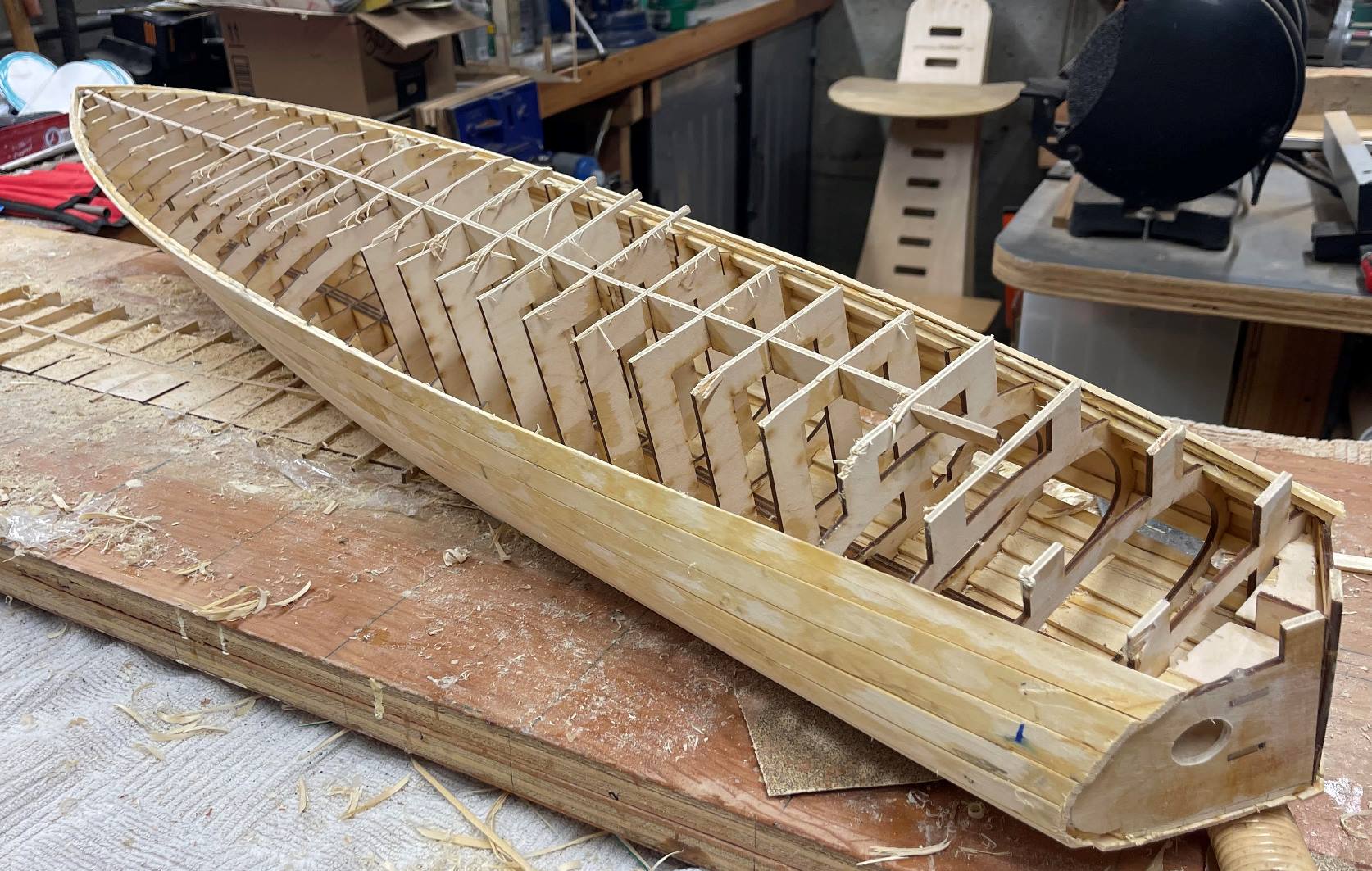
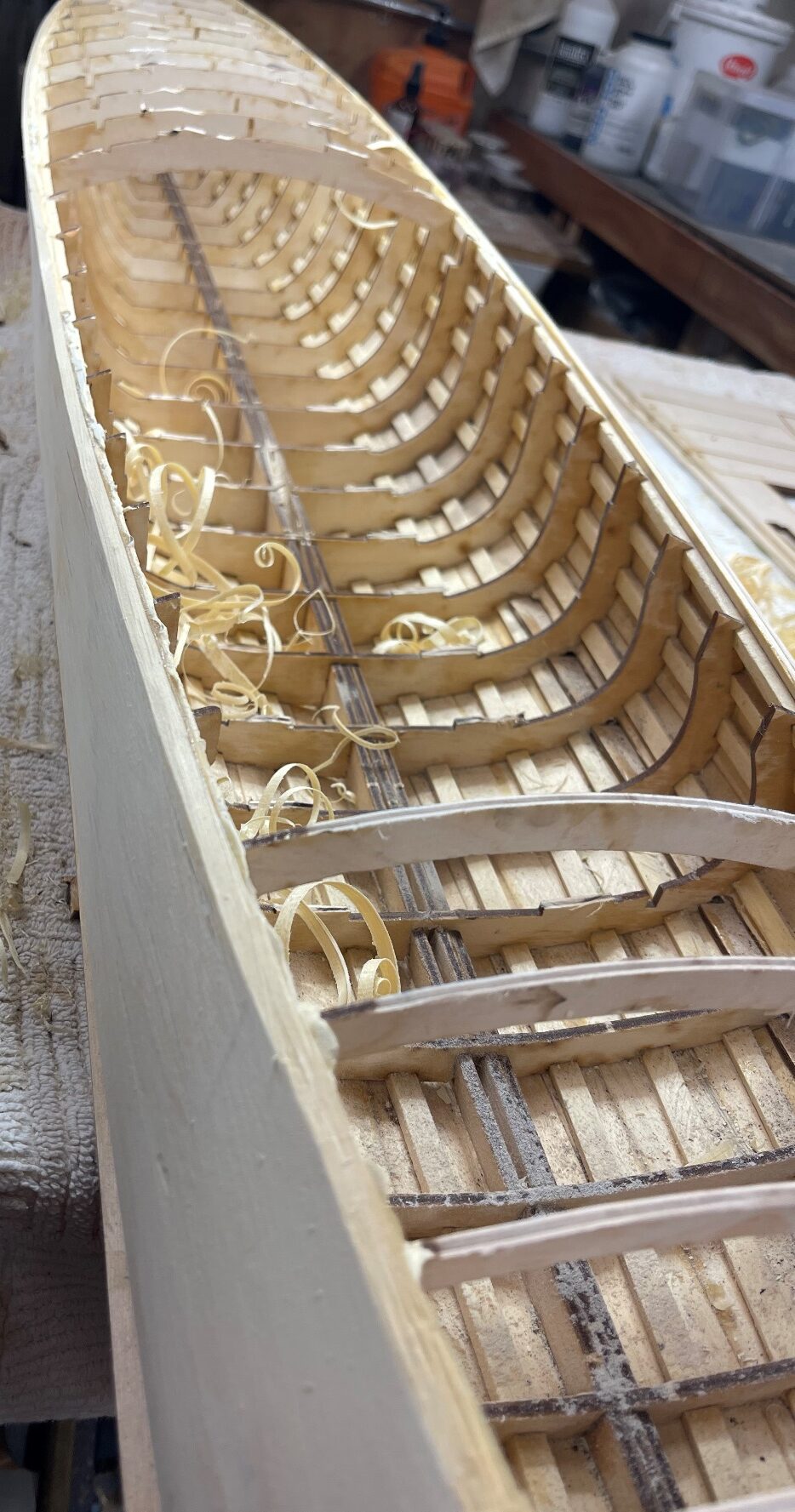
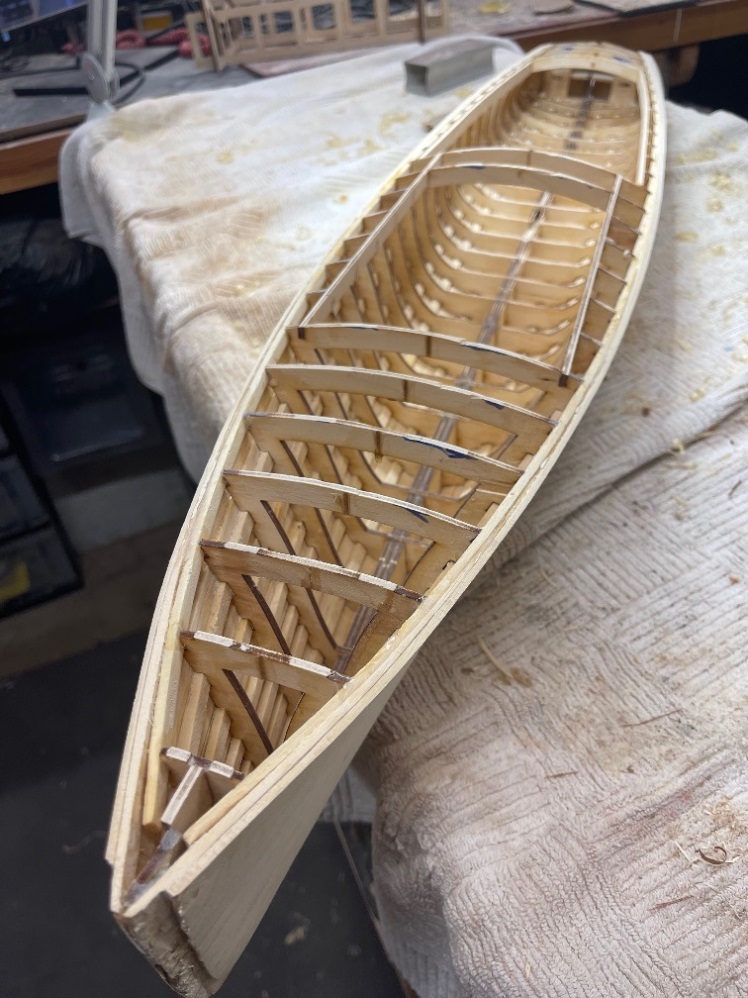
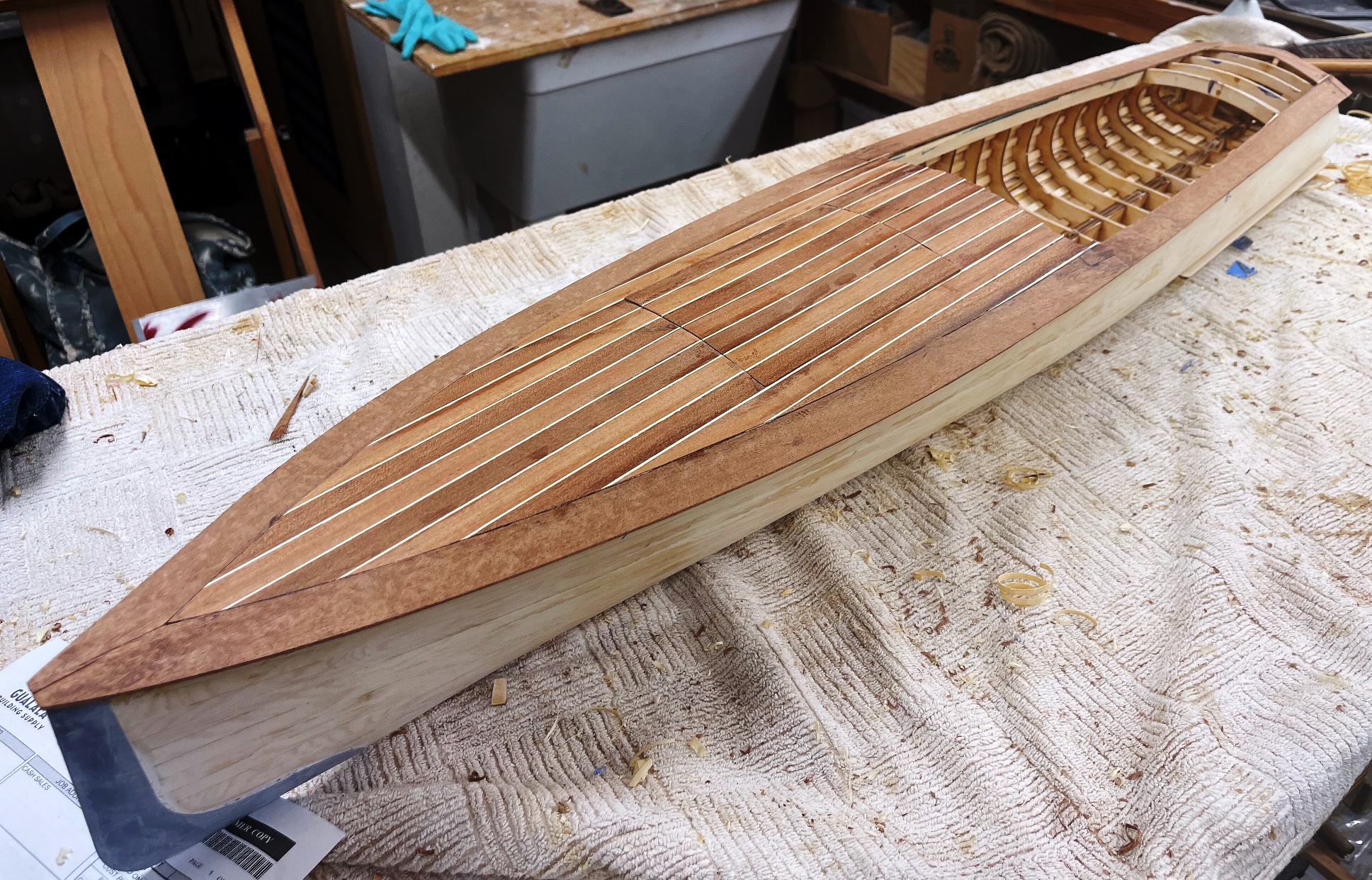
First step is to bevel all the frames so that stringers are just at the surface of each frame. This is simply completed with a sanding block, 120 grit sand paper, some patience, and a light touch. I usually plank the first layer from the keel up to the sheer.
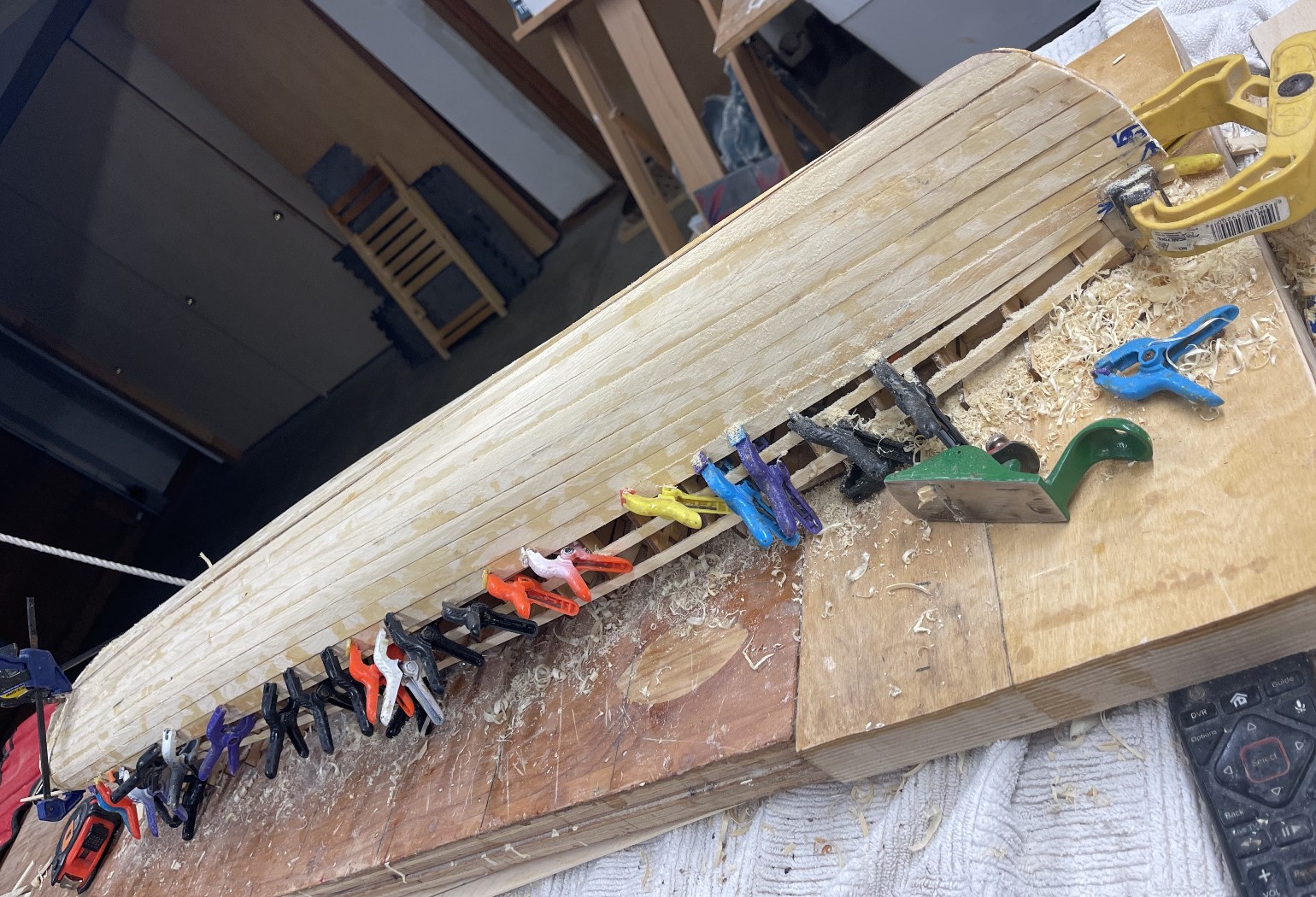
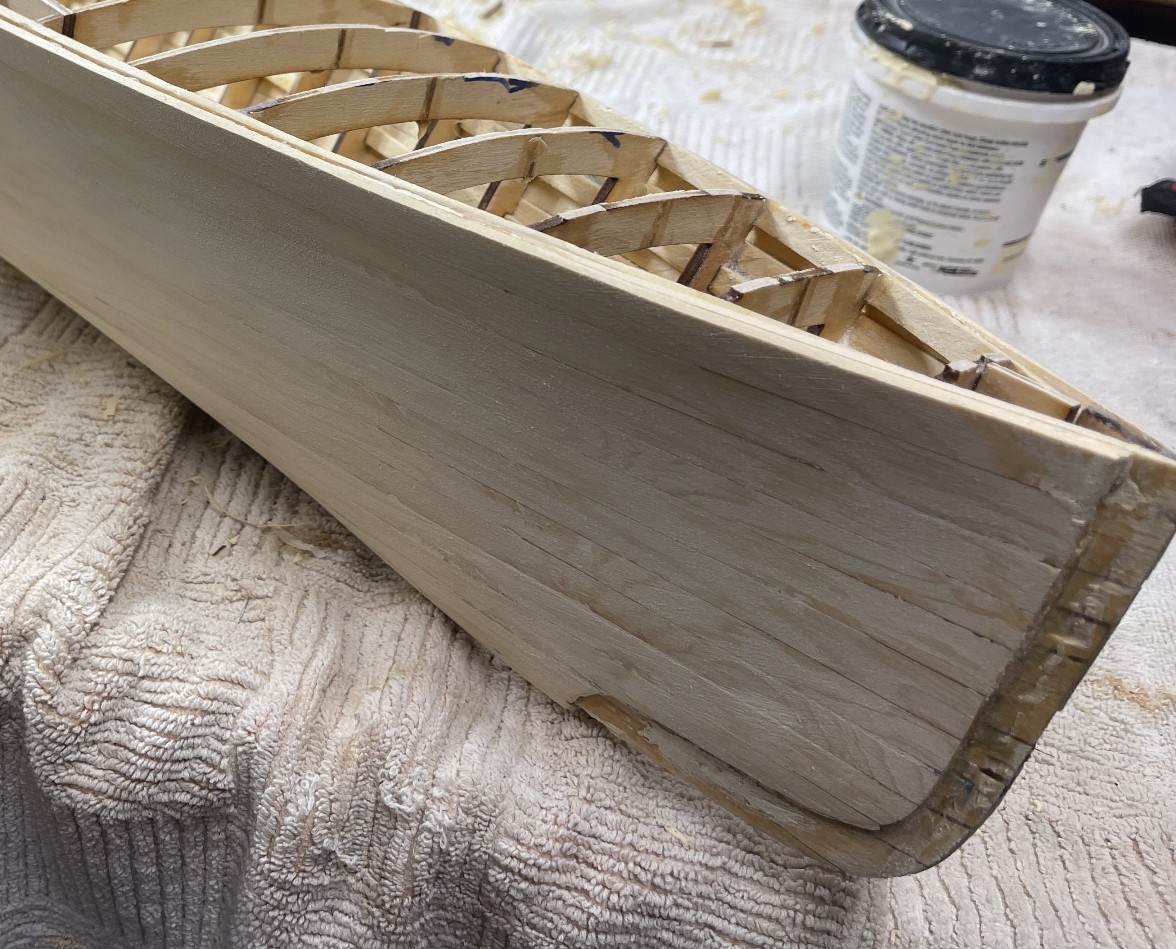
Following completion of this step, which, on the Mower, went remarkably quickly, with virtually no “spiling” of most of the planks, I fair the first layer, using easily sanded wood filler. This insures that the final layer of the hull is very fair with no bumps or depressions. I then add the second layer, planking from the sheer down. I have found that using this sequence removes any chance that seams are aligned.
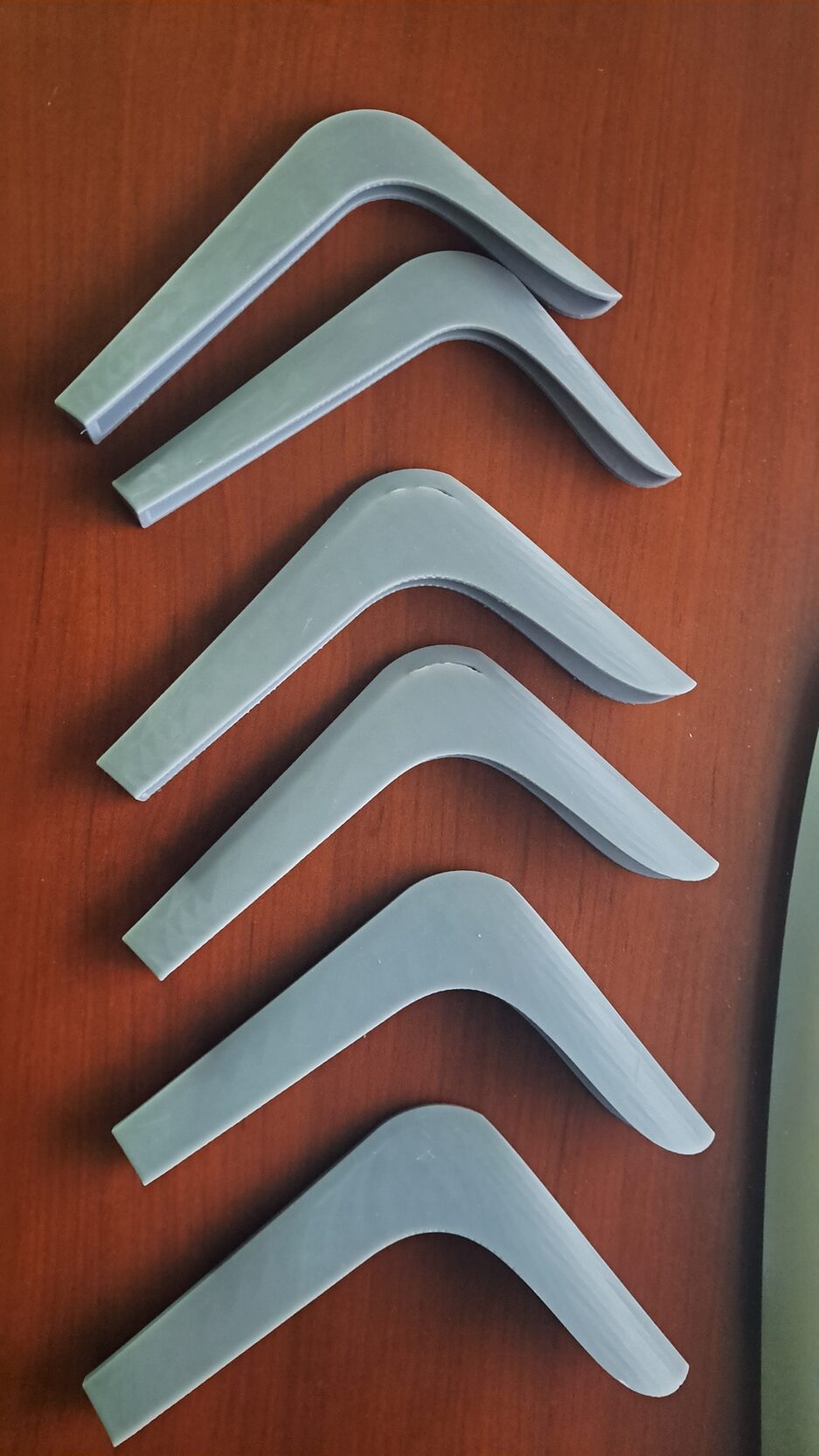
Don’t forget those cool strakes!
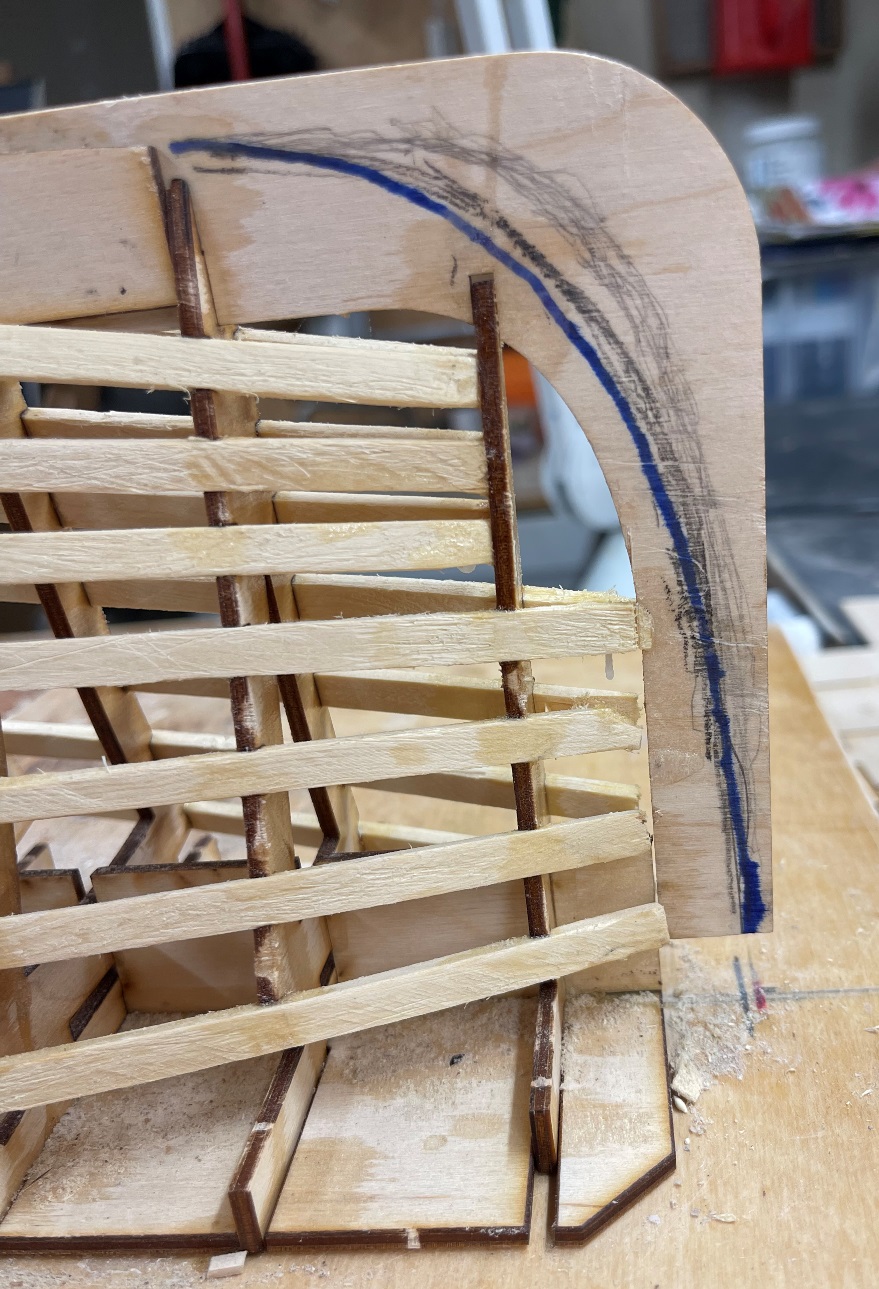
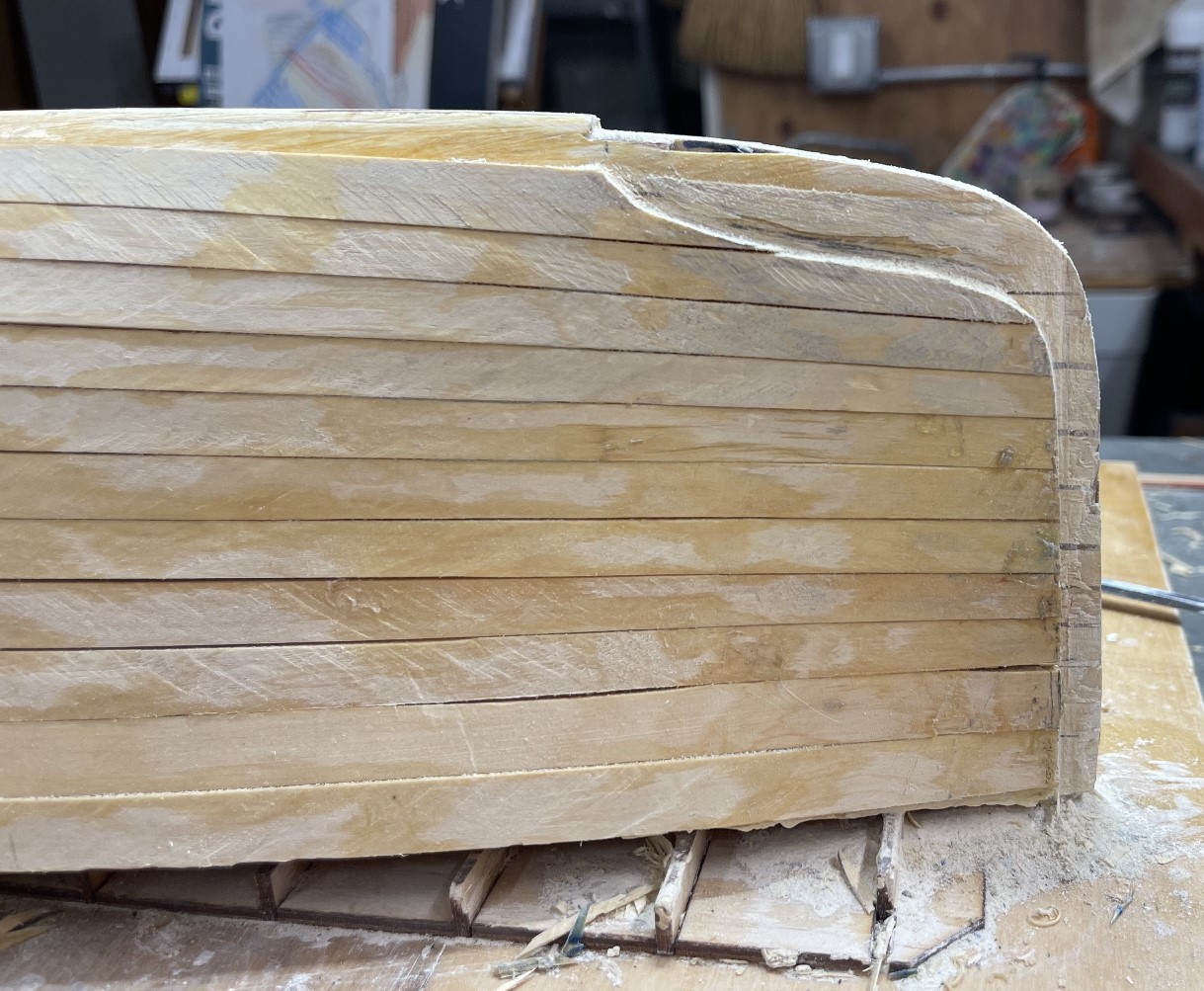
Locate and roughly clean up the strake locations as you are planking while you can still see them. Strakes will “slot” into these notches after some careful cleaning up and fitting. There are, at this point, two choices.
You may either:
- 1 – Plank over the prepared notches and carefully reveal them after the
planking or: - 2 – Test fit strakes and plank around them.
I chose option 1, which, while it took a long time, was a satisfying few hours of
fiddling. And they are strong!
Following completion of the planking, which, on the Mower, went remarkably quickly, with virtually no “spiling” of most of the planks, I fair the first layer, using easily sanded wood filler. This insures that the final layer of the hull is very fair with no bumps or depressions. I then add the second layer, planking from the approximate sheer down. I have found that using this sequence removes any chance that seams are aligned. Locate final strake location and fit strakes permanently.
Re drill prop shaft location.
Removal of hull from building board
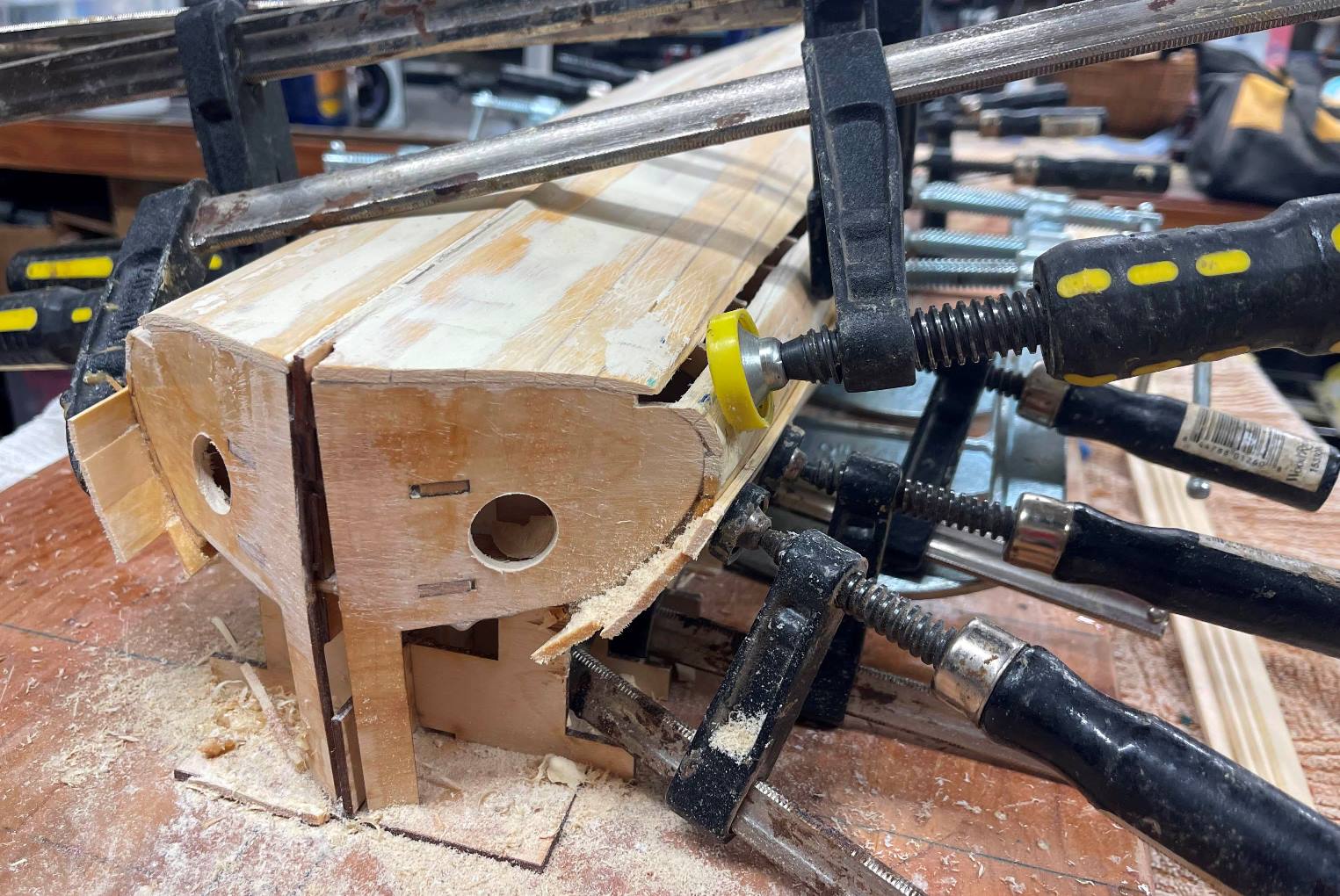
Its time to release th hull from it’s foundation. While, with care. This is easily accomplished (I use a Japanese saw) , it is also too easy to let the saw wander and start cutting into the carefully built hull. To this, I say, take your time, and verify each cut. There is a lot of excess wood, and it
can be confusing what to cut, and what is your precious hull. Remember, you will be cleaning up the frames and the interior after the boat is released from the building board, and access for final trimming will be much easier. Final trimming of the frames at the deck level will also establish the sheer line of
the boat, so constant use of a batten strip to carefully establish the sheer is
critical.
Epoxy boat interior and final hull fairing.
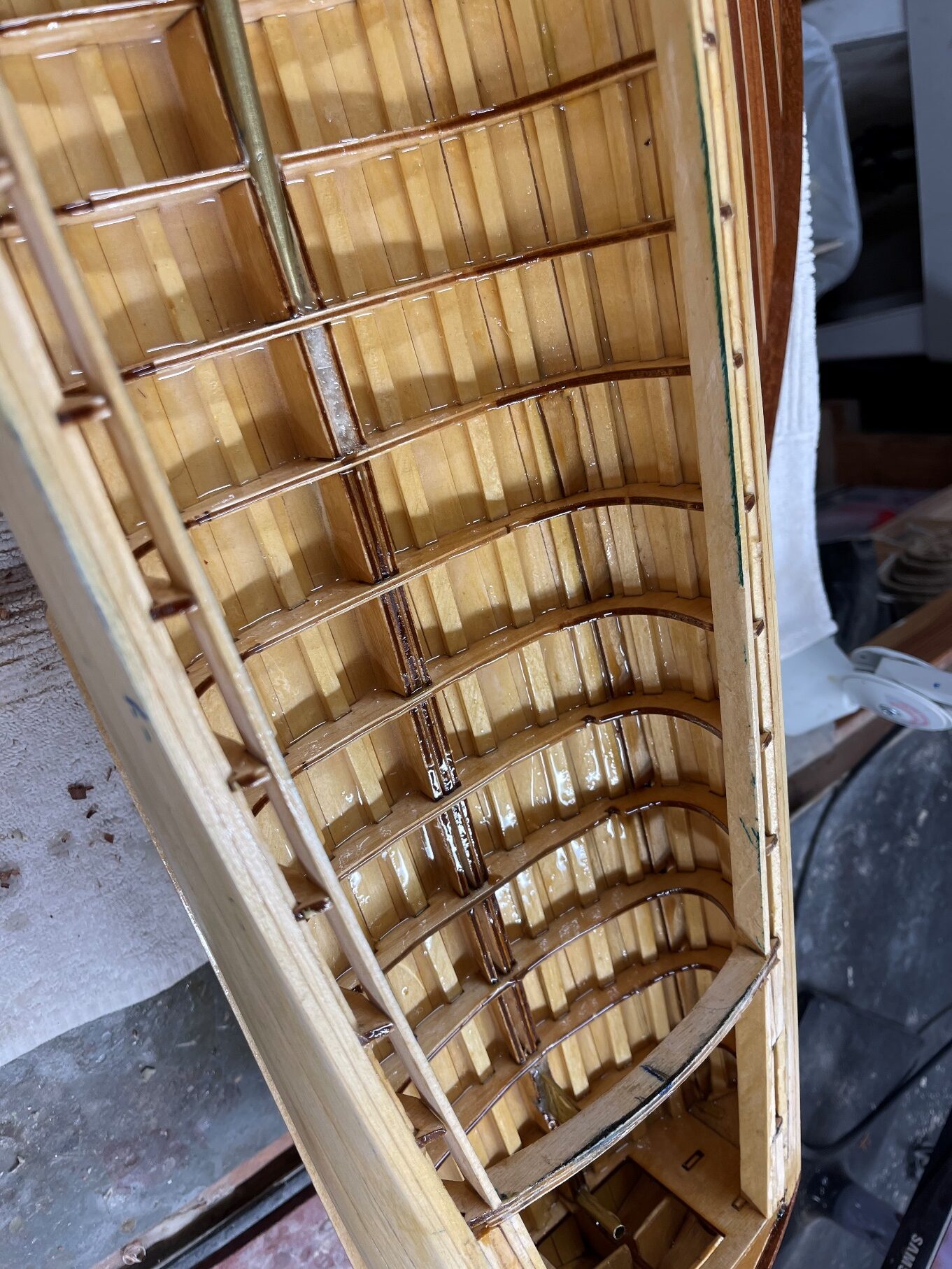
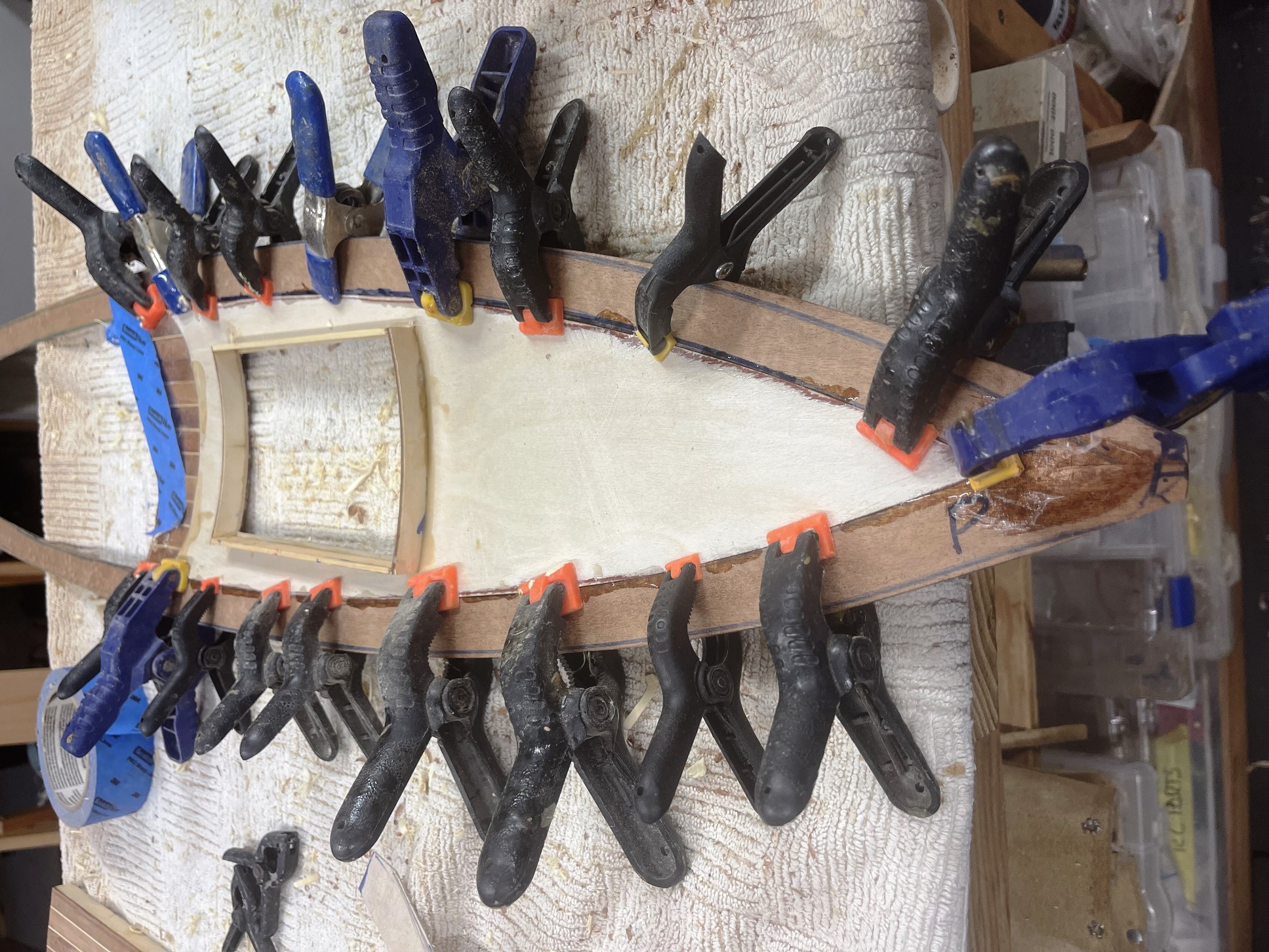
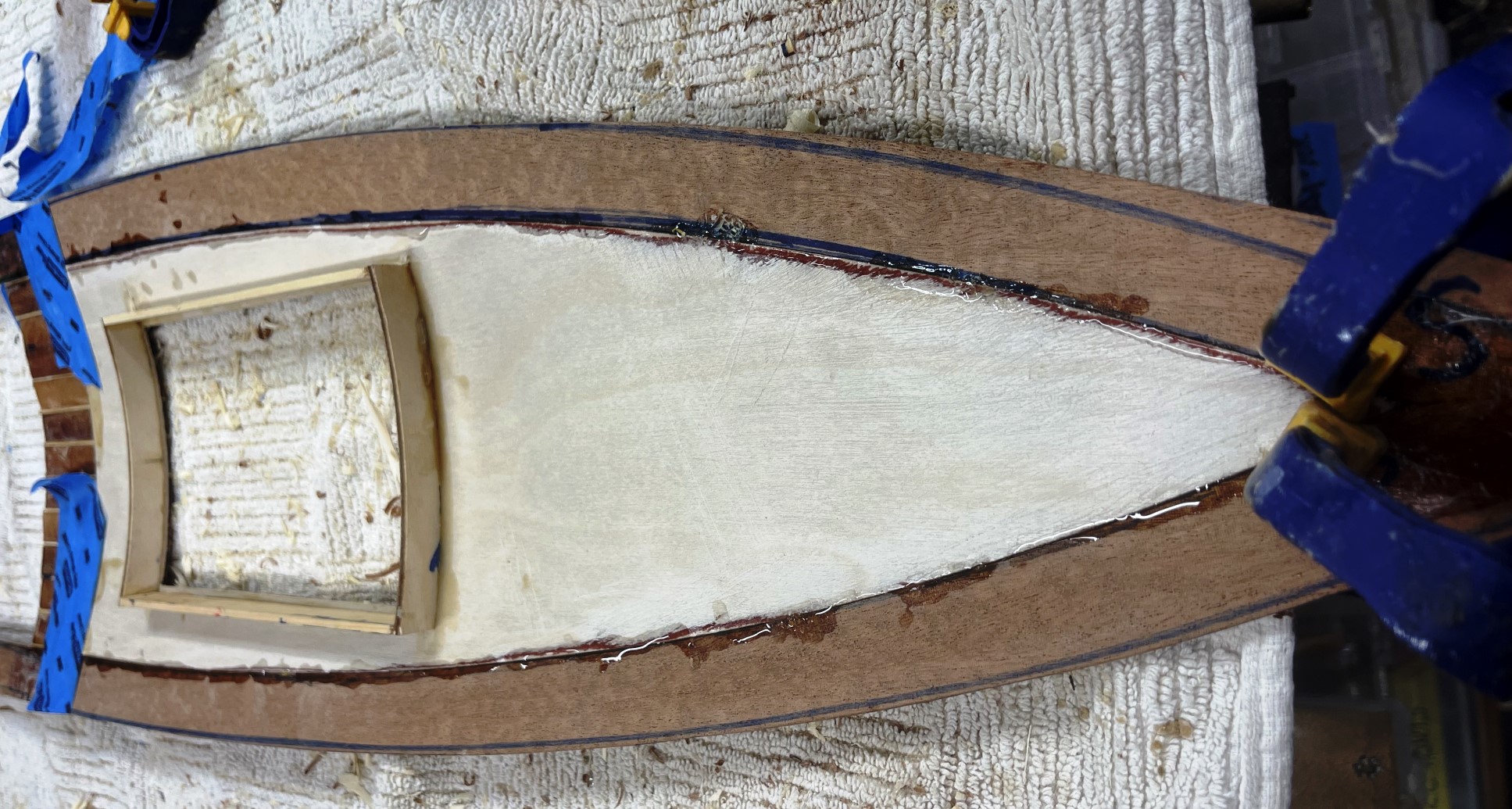
- Now is the prefect time to seal the boat interior, while there is access to every spot. I use self leveling epoxy (table top) and make sure that is doesn’t flood the interior but certainly seals it. It dries to a wonderful flat surface. There may be some leakage to the boat’s exterior, but the is easily wiped off.
- Once the interior is sealed, the exterior surface of the boat must be carefully shaped to create the final hull form, remove any high and low spot and locating the final sheer line. I use sandpaper, wrapped around wood blocks or sponges but care must be taken to remove the high spots, not accentuate the low spots. I usually go through several applications of very thin wood filler and many sheets of 120 grit sandpaper. I have also found disposable nail files very useful. (easy to find on
Amazon). I go through 50 sanding down a hull. - I chose not to fiberglass the hull exterior, but used several layers of epoxy as the preliminary finish. This step creates a durable hull that avoids creating more dents and bruises while working on the hull. Seeing the final shape of the hull is very satisfying.
Fitting out the interior before installing the deck
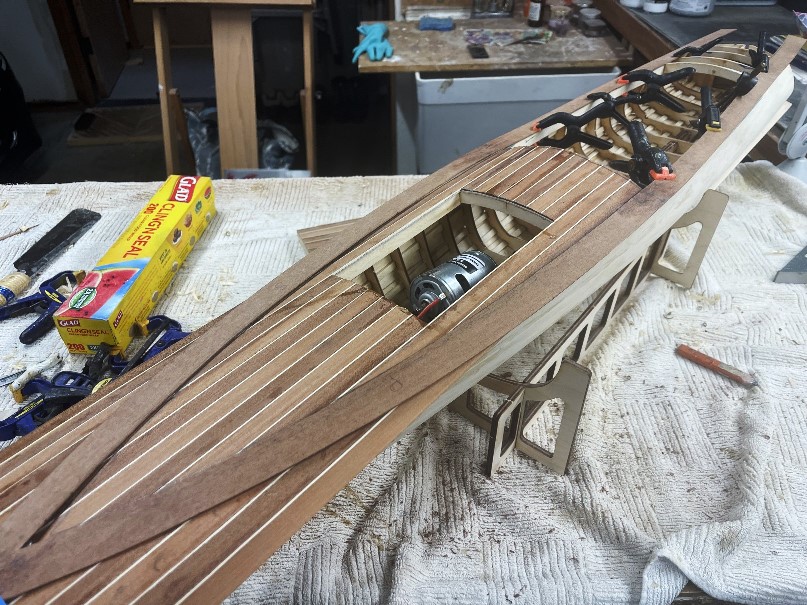
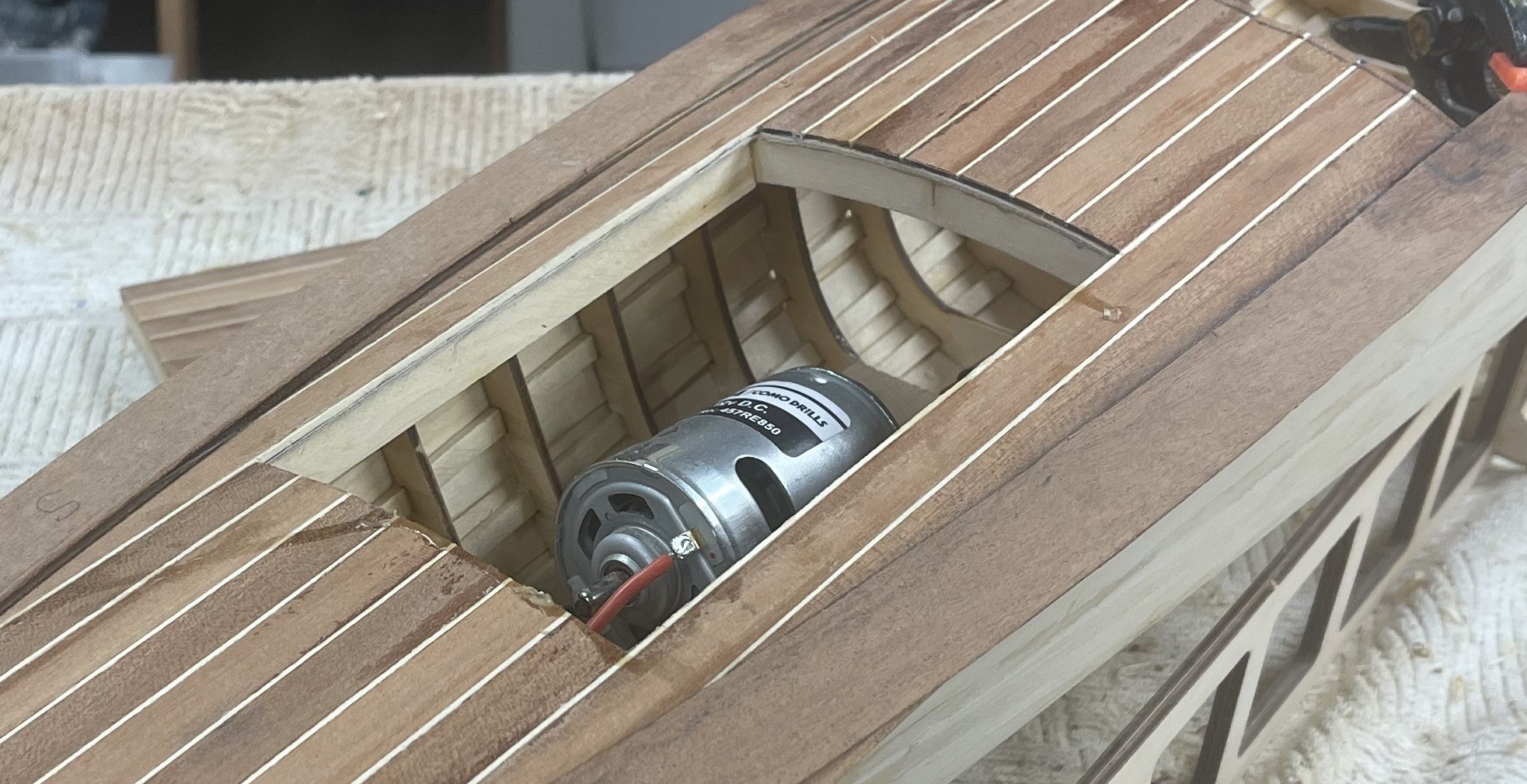
- Now is the time to attend to all of the various interior details that will not be easily accessible after the deck is installed. including installation of the prop shaft, the consequential motor mount location as it relates to the prop shaft, dashboard location, firewall installation, cockpit interior, rudder servo mount, concealed routes for various cord connections between future receiver, ESC motor control and batteries. Not only is finding accessible space for these critical for future enjoyment of the boat, but these elements affect the balance and performance of the boat.
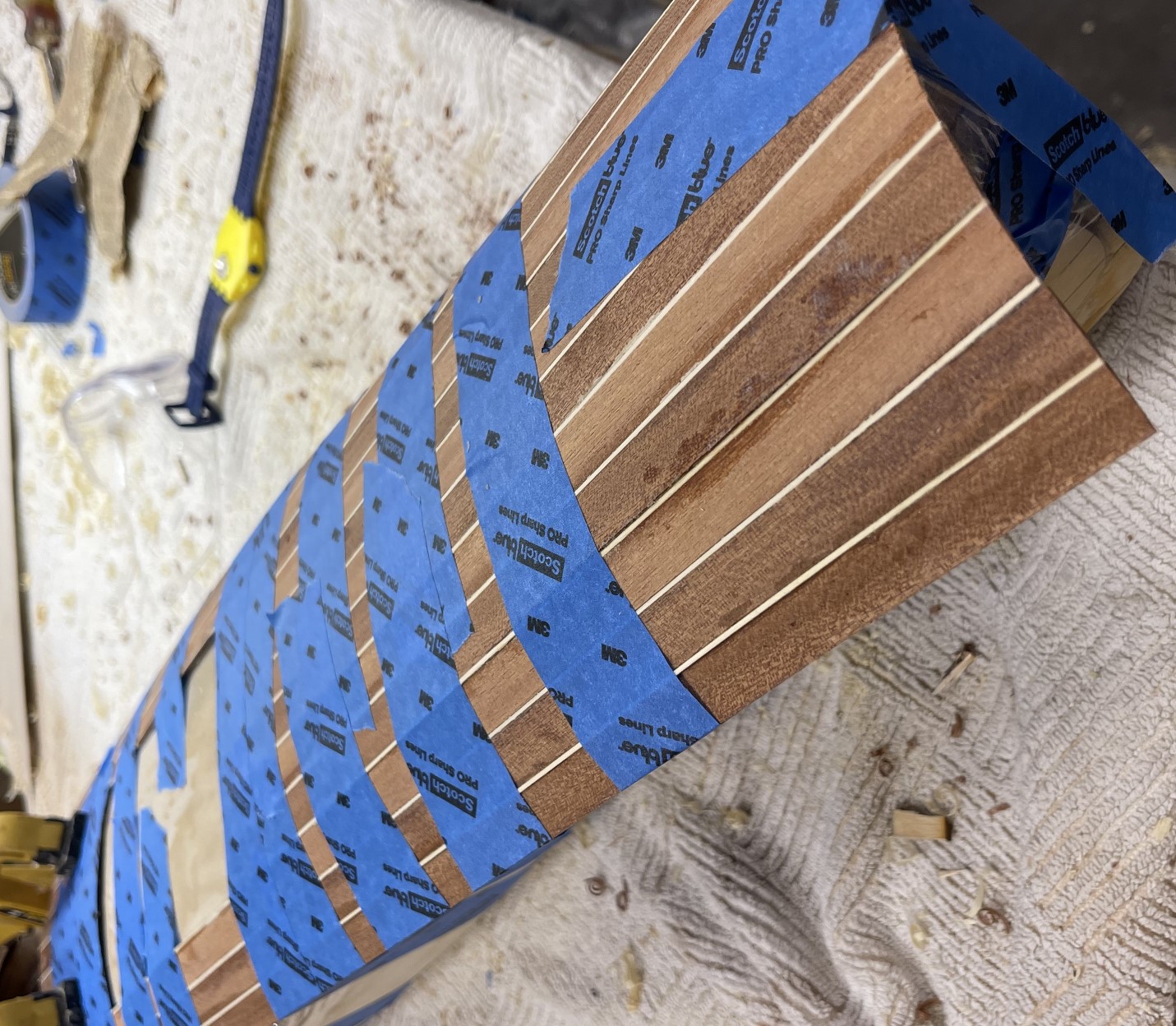
- Found that I would work on these issues while I was waiting for the deck pieces
to dry.