Excerpts from Wikipedia, the free encyclopedia
“John Gale Alden (1884–1962) was an American naval architect and the founder of Alden Designs.
Early life
Alden was born in Troy, New York, in 1884. At 18 years old, his father died, and Alden made the decision to train as a naval architect. He took courses at MIT and apprenticed with prominent naval architects Starling Burgess and Bowdoin B. Crowninshield,[2] starting in 1902.[3]
In 1900, his family moved to Dorchester, Massachusetts, where the Grand Banks fishing schooners were docked. These were said to have inspired his later designs.
Career
In 1907, Alden undertook a voyage that would define his distinctive design trademark: The schooner Fame, owned by the Eastern Fishing company, had to be returned to Boston when her crew of 23 men had gone down with smallpox. Alden put together a crew of just four inexperienced young men and one old salt to undertake the journey. During the weeks that followed, they experienced extreme winter weather of up to 60 mile an hour winds that turned the salt spray to ice. The boat, and the crew, completed the journey and it is said that Alden learned how to design a boat that would be resilient in heavy seas and when a vessel was short-handed.
After the voyage, Alden returned to the Burgess offices but left in 1909 to found his own company, the Alden Design Office in 1909.
Alden Design Office
The approach Alden took was to discuss requirements with the clients, make the initial sketches and then hand over the work to the draftsmen to complete. Therefore, each boat designed by the firm had Alden’s individual style stamped on.
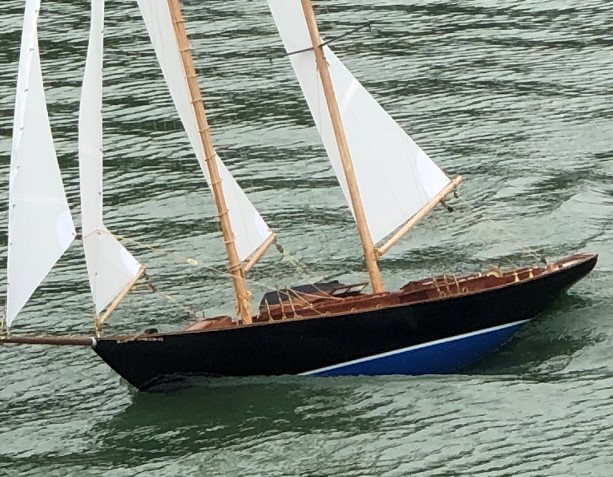
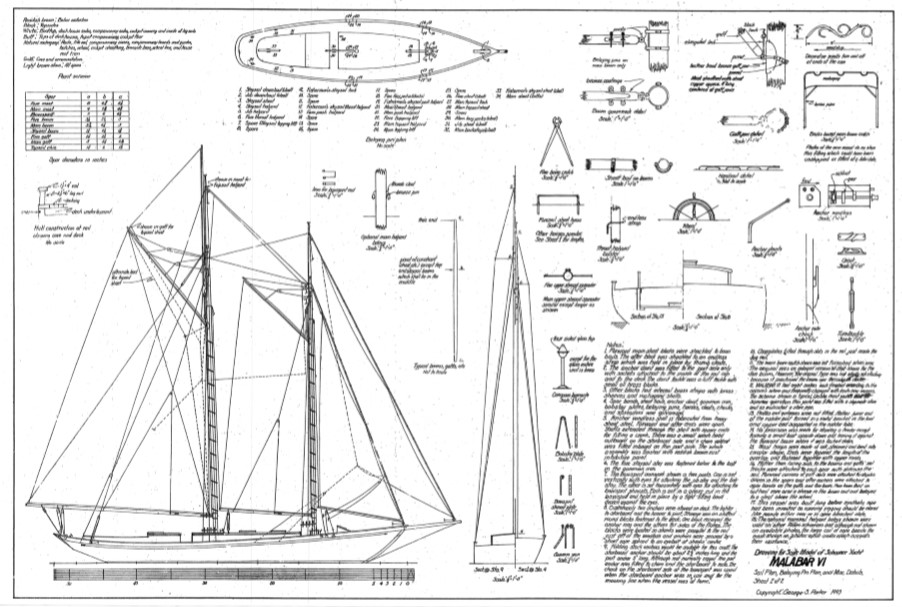
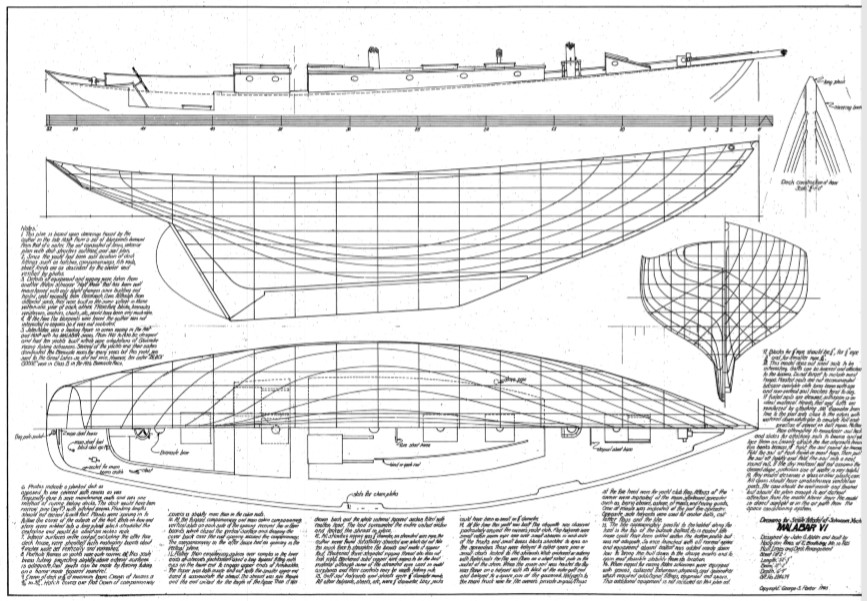
By 1932, the Alden Design Office was known around the world due to the success of the “Malabar” designs in the offshore racing scene. Over the next thirty years, Alden designed over 1,000 boats,[4] including the 63.5′ schooner When and If for General Patton,
Later life
Alden retired in 1955. The Alden Design office carried on until 2008, under the helm of Niels Christian Helleberg, naval architect.[1] Helleberg continued providing design and print services until closing his office in January 2014.[7][8]
Alden continued to race into his seventies, and enjoyed sailing one of his Sakonnet One designs until his death in Florida at the age of 78. His designs were donated by the company to MIT‘s Hart Nautical Collections.[3][9]
Alden was inducted into the National Sailing Hall of Fame in 2013.[10]